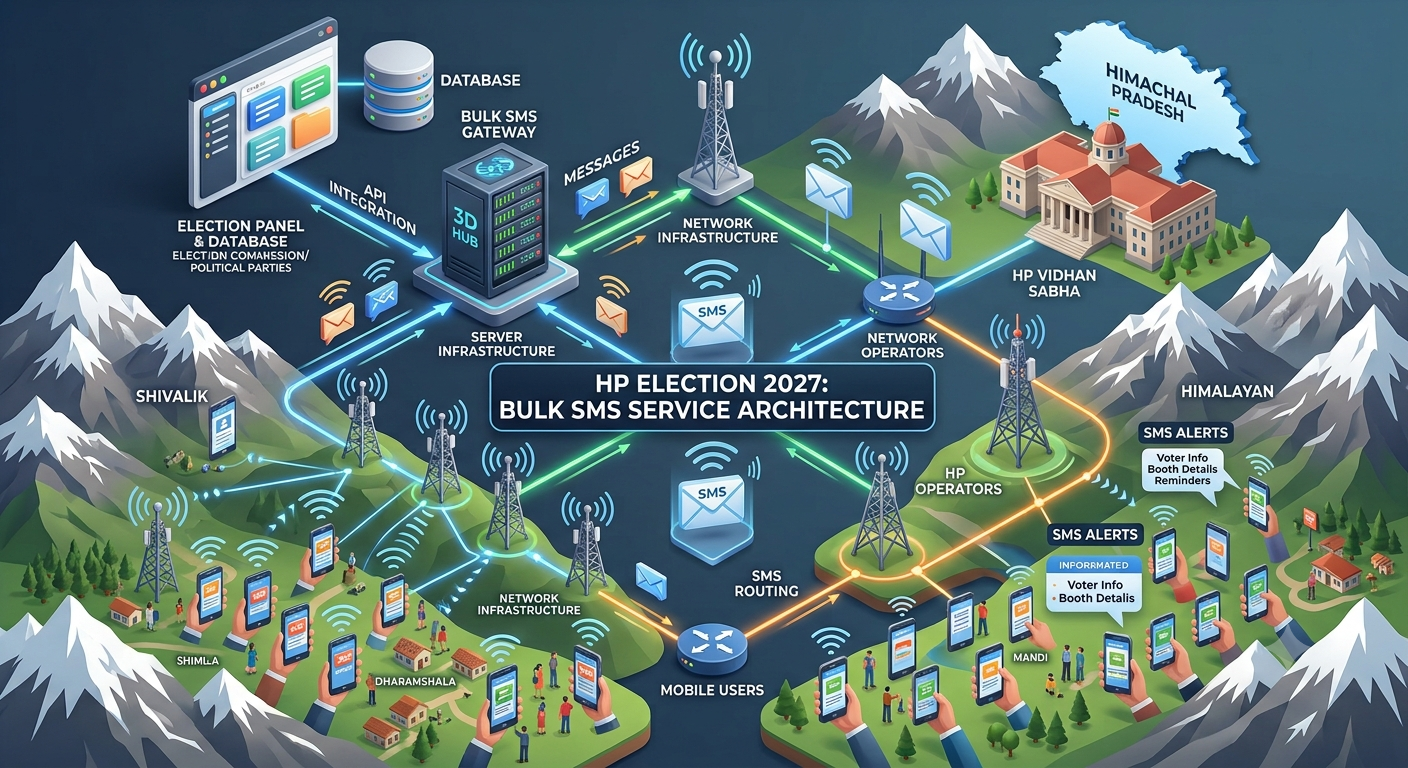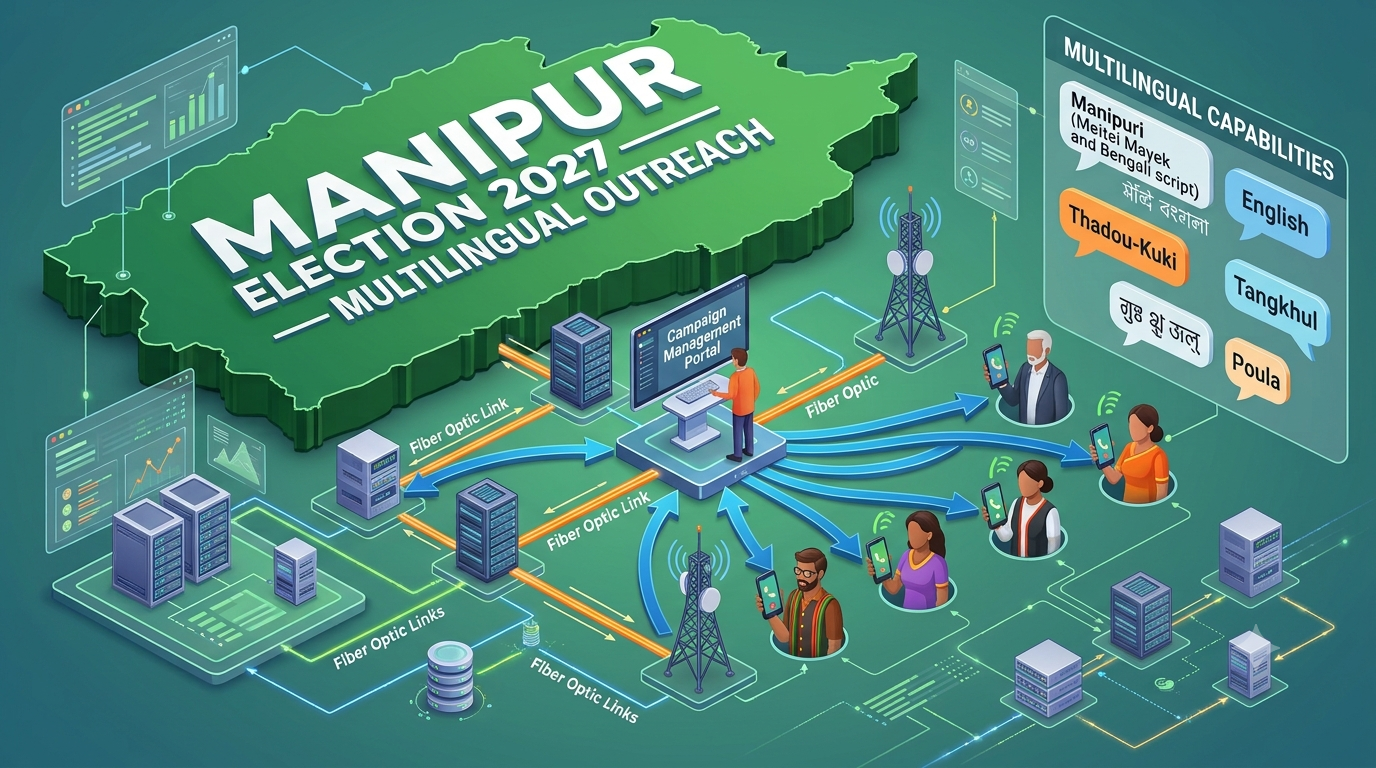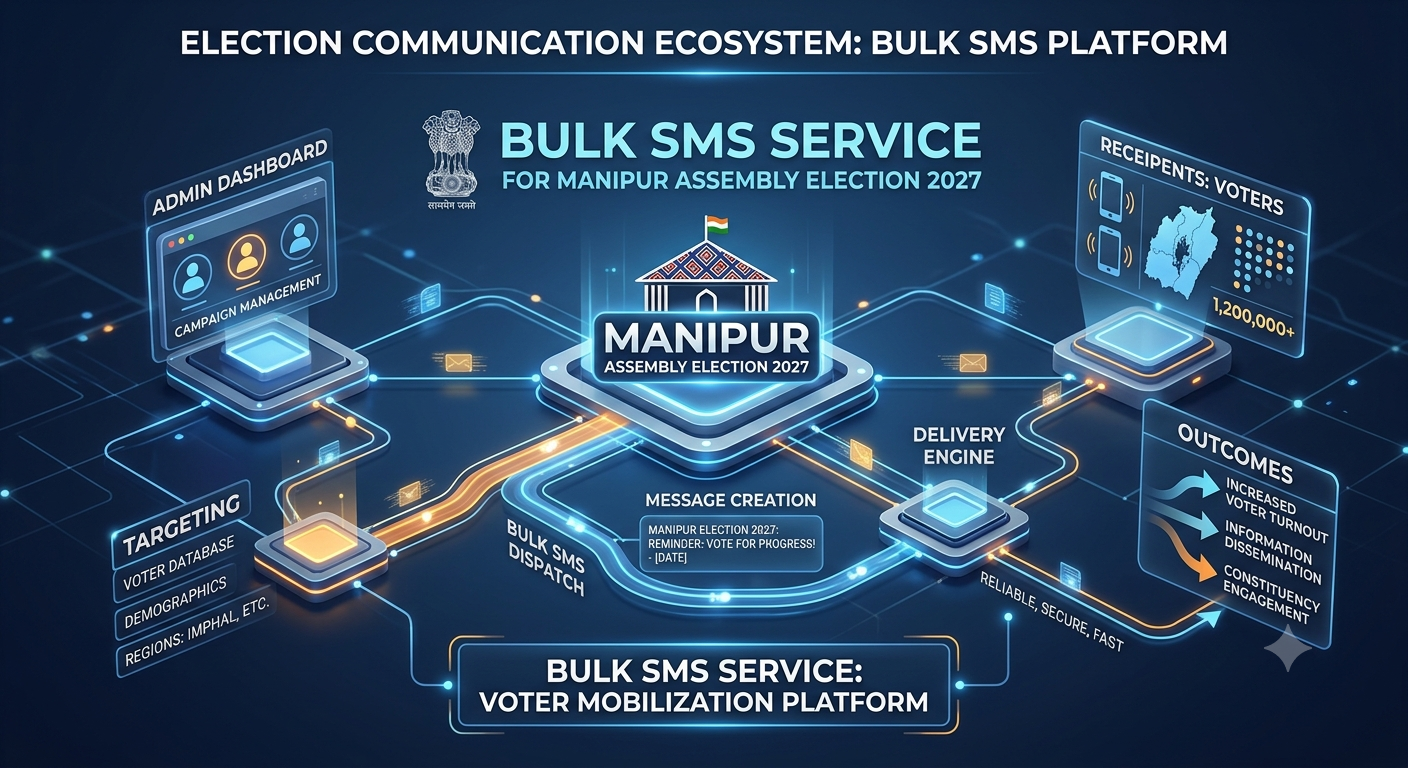

📞 Bulk Voice Call Service for Himachal Pradesh Election 2027
Effective election communication requires more than simply reaching a large audience. Campaign and organizational teams need a communication method that can deliver information quickly, clearly, and in a format that recipients can easily understand.
A Bulk Voice Call Service for Himachal Pradesh Election 2027 can help organizations distribute pre-recorded voice messages to large, properly managed contact lists. Voice communication can be useful for event announcements, meeting information, organizational updates, volunteer coordination, public information, and other permitted communication activities.
Unlike text-based communication, voice calls allow recipients to hear a message directly. This can make voice broadcasting useful when the information needs to be communicated in a conversational and easy-to-understand format.
However, large-scale voice calling should always be planned around applicable telecom regulations, recipient preferences, consent requirements, election instructions, and responsible communication practices.
🗳️ Understanding the Election Communication Landscape
Election communication in Himachal Pradesh may involve different geographical areas, constituencies, campaign teams, volunteers, and local organizational groups.
The Election Commission of India currently lists 3 January 2028 as the due date for completion of the present Himachal Pradesh Legislative Assembly term. Therefore, the exact timing and schedule of any future election should be confirmed through official Election Commission announcements rather than assumed from the term date alone.
For organizations preparing their communication infrastructure in advance, this makes database management, audience segmentation, content planning, and technology readiness particularly important.
📞 What Is Bulk Voice Call Service?
Bulk Voice Call Service is a technology-based communication solution that allows organizations to distribute a recorded voice message to multiple recipients through an automated calling system.
Instead of manually calling every person, campaign teams can prepare a voice recording and distribute it to a properly managed recipient list.
A voice campaign can potentially support:
📢 Event announcements
🗓️ Meeting reminders
📍 Location-based communication
👥 Volunteer coordination
📣 Organizational announcements
🔔 Important reminders
🗣️ Multilingual voice communication
📊 Response-based campaigns
📋 Campaign follow-ups
The actual use of the service should always comply with applicable laws, telecom requirements, election instructions, and platform/provider policies.
🎯 Why Use Bulk Voice Calls for Election Communication?
Voice communication can provide a different experience from written messages.
1. 🗣️ Direct Human-Like Communication
A professionally recorded voice message can communicate information in a natural speaking format.
This can be useful when the recipient needs to understand an announcement without reading a long text.
2. 📢 Large-Scale Outreach
A Bulk Voice Call Service can help distribute the same approved message across a large recipient database through an organized calling process.
3. 🎯 Audience Segmentation
Instead of sending one voice message to everyone, campaign teams can create different recipient groups based on legitimate communication requirements.
For example:
Constituency
District
Volunteer group
Event group
Organizational team
Language preference, where appropriately collected
4. 🌐 Multilingual Communication
Himachal Pradesh includes audiences with different language preferences. Where appropriate information is lawfully available, campaign teams can prepare separate voice recordings for different audience groups.
This can make communication easier to understand and more locally relevant.
📍 Constituency-Wise Voice Communication
Geographic segmentation can be an important part of a large-scale voice campaign.
A centralized database can be divided into relevant groups, allowing teams to prepare communication for specific areas.
For example:
Segment 1: Constituency-level announcement
Segment 2: District-level event communication
Segment 3: Volunteer coordination
Segment 4: Meeting reminders
Segment 5: Organization-specific updates
This approach reduces the need to distribute every message to the entire database.
🗣️ Multilingual Voice Outreach
Voice communication can be particularly useful when messages need to be delivered in a language or style familiar to the intended audience.
A professional multilingual workflow can include:
📋 Identify the relevant audience segment.
📝 Prepare the original message.
🗣️ Translate and review the message where required.
🎙️ Record a clear voice version.
🔍 Verify pronunciation, names, locations, and dates.
📤 Assign the recording to the appropriate audience.
📊 Monitor campaign results.
The recording should sound natural rather than overly fast or robotic.
🎙️ Importance of Voice Script Preparation
The quality of the voice script can directly affect communication clarity.
A good voice script should:
Start with a clear introduction.
Explain the purpose of the call.
Mention the important information early.
Use simple language.
Avoid unnecessary details.
Clearly communicate dates and times.
End with an appropriate closing.
For example, an event announcement can follow this structure:
Introduction → Purpose → Event Date → Time → Location → Important Instruction → Closing
Keeping the script structured makes it easier for recipients to understand the message during a short call.
🔢 Response Capturing Through Voice Calls
One useful feature of an advanced Bulk Voice Call Service is response capturing.
A campaign can be designed so that recipients can interact with the call by pressing a keypad option.
For example:
Press 1 → Interested
Press 2 → Need more information
Press 3 → Not interested
The exact options should be based on the legitimate communication objective.
Response data can then be reviewed through campaign reports, helping the communication team understand recipient responses.
📊 Why Response Capturing Matters
Without response capturing, a campaign may only show basic calling information.
With response capturing, the organization can potentially identify:
Total calls attempted
Calls answered
Keypad responses
Response category
Call duration
Unanswered calls
Failed calls
This can make voice communication more measurable and organized.
📊 Voice Campaign Reporting
Reporting is an important part of large-scale voice communication.
A professional platform may provide campaign-level information such as:
Total numbers uploaded
Calls initiated
Calls connected
Calls not answered
Failed calls
Call duration
Keypad responses
Response distribution
For example:
Total Numbers: 50,000
Calls Initiated: 50,000
Connected Calls: 38,000
No Response: 9,000
Failed: 3,000
The actual results will depend on the database, telecom network, recipient availability, and campaign configuration.
⚠️ Telecom Compliance for Bulk Voice Calls
Large-scale voice communication must not be treated as unrestricted calling.
TRAI's current guidance covers senders, telemarketers, customer preferences, consent, and commercial communication through voice calls and SMS. TRAI also identifies promotional voice calls and discusses requirements for senders using telecom resources.
TRAI's customer-preference framework specifically includes Voice Call, Auto Dialer Call, and Robo Call as communication modes, along with preference and time-band controls.
TRAI also defines UCC/spam in relation to unwanted messages or voice calls and provides mechanisms for customers to manage preferences and consent.
✅ Important Compliance Practices
Before launching a voice campaign, teams should:
Verify the applicable sender requirements.
Use an appropriate authorized calling infrastructure.
Respect recipient preferences and consent requirements.
Follow applicable telecom regulations.
Review current election-related instructions.
Maintain campaign and consent records where required.
Avoid unsolicited or misleading communication.
Confirm the calling category with the service provider before launch.
Important: Telecom rules and numbering requirements can change. For example, TRAI published a direction in August 2026 concerning the operationalization of the 1601 numbering series for Service and Transactional Voice Calls in specified sectors. Therefore, campaign teams should confirm the applicable numbering and calling framework with their telecom provider before deployment.
🎯 Best Practices for Himachal Pradesh Election 2027 Voice Campaigns
1. 📋 Maintain a Clean Database
Remove duplicate, invalid, and outdated numbers before launching the campaign.
2. 🎯 Segment the Audience
Separate recipients based on legitimate communication requirements instead of using one large undifferentiated list.
3. 📝 Keep Voice Scripts Short
Recipients are more likely to understand a concise message than a long recording containing multiple announcements.
4. 🗣️ Use Clear Voice Recordings
The recording should have clear pronunciation, appropriate speed, and minimal background noise.
5. 🌐 Consider Language Requirements
Where appropriate, prepare different recordings for different language segments.
6. 🔢 Use Response Capturing Where Useful
Keypad responses can help organize feedback or interest categories where such interaction is appropriate and permitted.
7. 📊 Review Campaign Reports
Use reports to identify connection rates, failed calls, unanswered calls, and captured responses.
8. ⚠️ Review Compliance Before Every Campaign
Do not assume that a previous campaign's configuration automatically remains compliant. Current telecom and election requirements should be reviewed before deployment.
❌ Common Mistakes to Avoid
Poorly planned voice campaigns can create operational and compliance problems.
Avoid:
Using outdated databases
Calling without reviewing applicable permissions
Sending overly long recordings
Using unclear voice recordings
Failing to segment audiences
Repeating calls unnecessarily
Ignoring customer preferences
Using inappropriate calling infrastructure
Not monitoring response reports
Assuming SMS rules automatically apply identically to voice calls
The goal should be responsible, relevant, and measurable communication, rather than simply maximizing call volume.
🚀 How to Plan a Professional Bulk Voice Call Campaign
A practical workflow can look like this:
Database Preparation
⬇️
Audience Segmentation
⬇️
Voice Script Creation
⬇️
Language & Recording Review
⬇️
Compliance Verification
⬇️
Campaign Configuration
⬇️
Voice Call Deployment
⬇️
Response Capturing
⬇️
Delivery & Response Reporting
This structured process can help campaign teams manage large-scale communication more efficiently.