🌐 Multilingual Campaign Messaging: Reaching Voters in Regional Languages at Scale
📢 Introduction
India is one of the most linguistically diverse countries in the world, with voters communicating in dozens of major languages and hundreds of regional dialects. A political campaign that communicates only in one language risks missing meaningful engagement opportunities across constituencies.
This is why multilingual campaign messaging has become one of the most important voter outreach strategies for modern election campaigns. Political parties, candidates, and campaign managers increasingly rely on Bulk SMS Service, Bulk WhatsApp Service, and Bulk Voice Call Service to communicate with voters in their preferred regional languages.
A well-planned multilingual SMS campaign India regional languages strategy helps campaigns improve message comprehension, increase voter engagement, strengthen local connections, and expand outreach across urban and rural constituencies.
In this guide, we’ll explore why regional-language communication matters, how multilingual messaging works across different channels, and the best practices for executing large-scale multilingual election campaigns.
🌍 Why Regional-Language Communication Matters
Language is more than a communication tool—it is closely connected to identity, trust, and community engagement.
When voters receive campaign messages in their own language, they are generally more likely to:
- 📩 Read the message carefully
- 🤝 Trust the communication
- 📍 Relate to local issues
- 👥 Share information with family and community members
- 🗳️ Remember campaign messages
For election campaigns, regional-language communication can significantly improve the effectiveness of voter outreach.
📱 What Is a Multilingual Campaign Messaging Strategy?
A multilingual campaign strategy involves creating and distributing campaign communication in multiple regional languages based on the target audience.
Instead of sending one standard message, campaigns prepare language-specific communication for different constituencies.
Examples include:
- 📢 Rally announcements
- 🗳️ Polling reminders
- 📅 Candidate schedules
- 📝 Manifesto highlights
- 👥 Volunteer coordination
- 📍 Constituency-specific updates
- 📣 Public awareness campaigns
This approach ensures that voters receive messages they can easily understand.
📩 Bulk SMS Service for Regional-Language Campaigns
Bulk SMS remains one of the most effective multilingual communication channels because it works on both smartphones and feature phones.
Common SMS Campaign Use Cases
- 🗳️ Polling day reminders
- 📢 Rally invitations
- 📍 Booth information
- 📅 Candidate announcements
- 📝 Local development messages
- 👥 Volunteer communication
Advantages of Multilingual Bulk SMS
- No internet required
- Fast delivery
- Large-scale outreach
- Regional-language support
- Cost-effective communication
Because SMS reaches a broad audience, it is particularly valuable for multilingual voter communication across diverse constituencies.
💬 Bulk WhatsApp Service for Multilingual Engagement
Bulk WhatsApp Service allows campaigns to combine regional-language text with multimedia communication.
Campaign teams can share:
- 📸 Candidate posters
- 🎥 Campaign videos
- 📄 Manifesto PDFs
- 🎙️ Audio messages
- 📍 Event details
- 🔗 Official campaign links
Regional-language WhatsApp communication is especially effective for volunteer groups, supporter communities, and constituency-level engagement.
📞 Bulk Voice Call Service for Multilingual Outreach
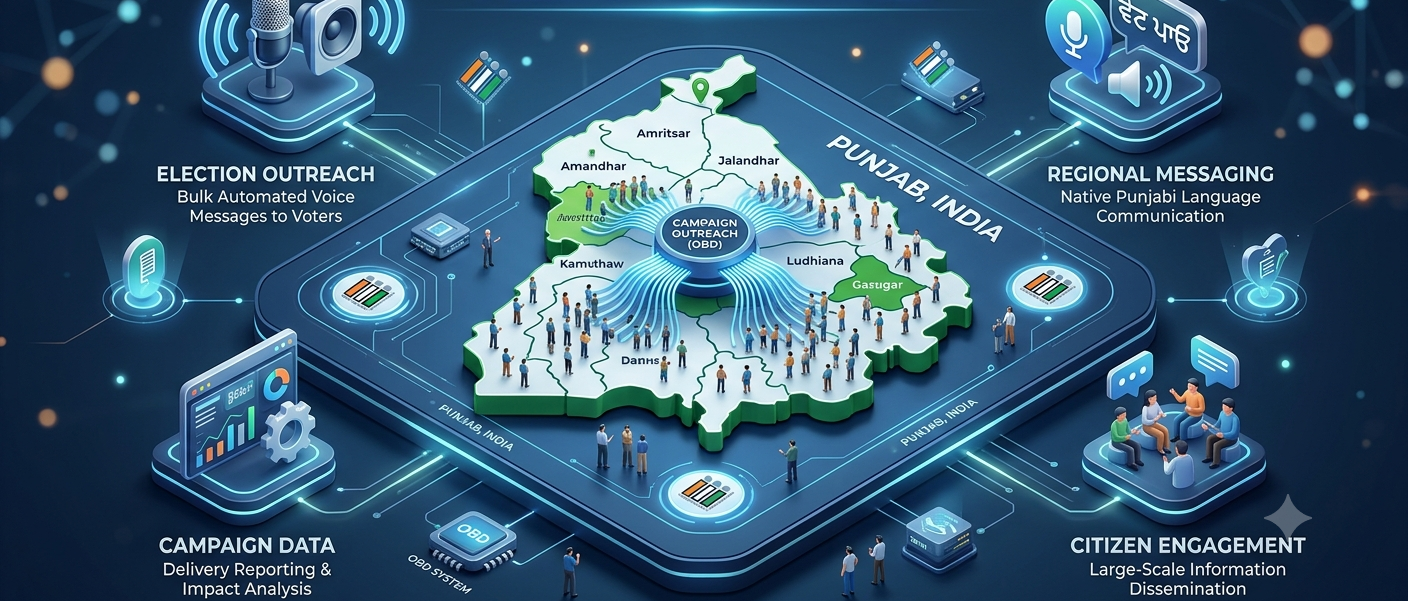
Voice communication is one of the strongest multilingual campaign tools because it allows voters to hear messages in their native language.
Political campaigns use Bulk Voice Call Service for:
- 🎤 Candidate voice messages
- 📢 Rally announcements
- 🗳️ Polling reminders
- 🌐 Regional-language communication
- 👥 Volunteer instructions
- 📣 Public awareness campaigns
Voice messages are particularly effective in rural areas and among audiences that prefer spoken communication over written text.
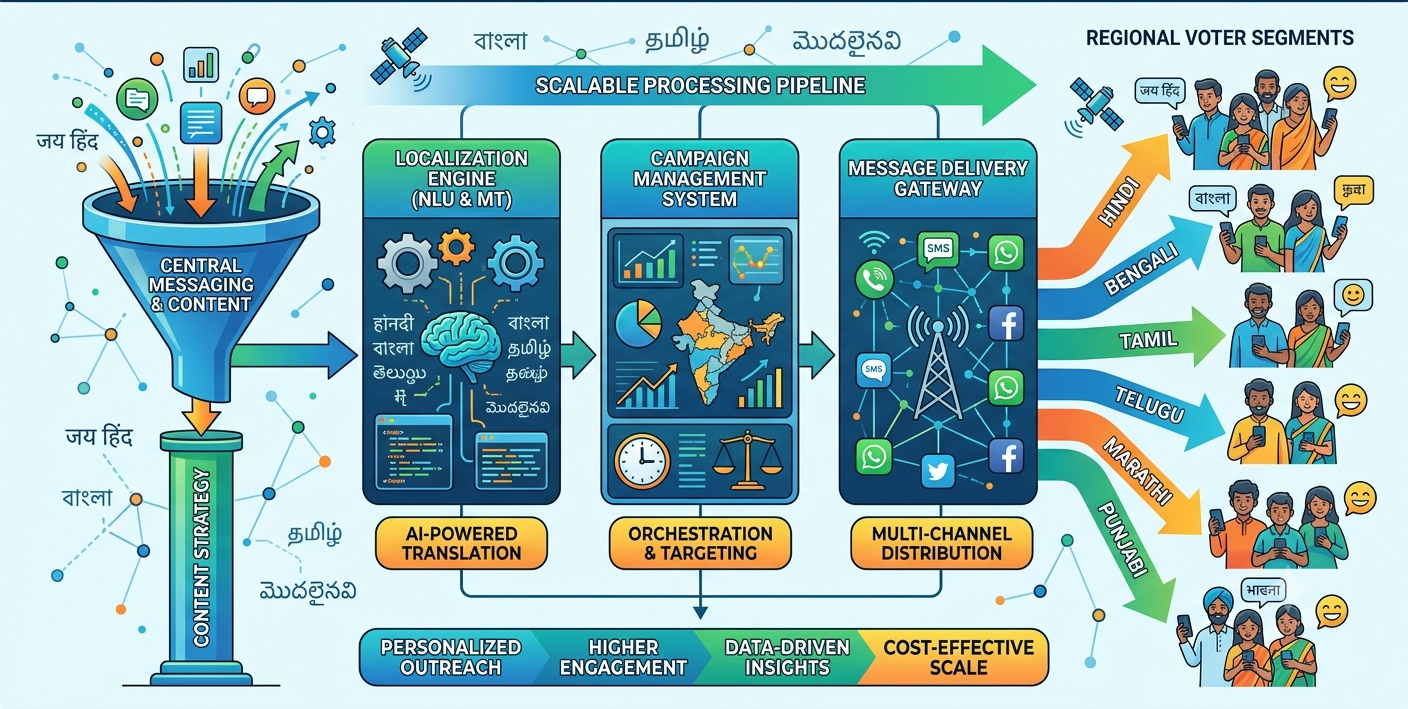
🗺️ How Campaigns Execute Multilingual Messaging at Scale
Successful multilingual campaigns require organized planning.
Step 1: Segment the Voter Database
Organize contacts by:
- Constituency
- District
- Language
- Community
- Volunteer groups
Step 2: Prepare Language Versions
Create professionally translated campaign messages for each target language.
Step 3: Review Local Context
Adapt messaging for local issues, cultural references, and constituency-specific concerns.
Step 4: Schedule Campaigns
Coordinate SMS, WhatsApp, and Voice Call campaigns across different regions.
Step 5: Monitor Performance
Track delivery reports and engagement metrics for each language segment.
📊 Multilingual Communication Across Channels
| Feature | Bulk SMS | Bulk WhatsApp | Bulk Voice Call |
|---|---|---|---|
| Regional Language Support | Excellent | Excellent | Excellent |
| Internet Required | No | Yes | No |
| Feature Phone Support | Yes | No | Yes |
| Multimedia Support | No | Yes | Audio |
| Rural Reach | Excellent | Moderate | Excellent |
| Emotional Impact | Medium | High | Very High |
Each channel plays a different role in a multilingual communication strategy.
🎯 Best Practices for Multilingual Election Campaigns
🌐 Use Native Translators
Professional translation improves accuracy and voter trust.
📍 Localize the Message
Do not simply translate—adapt the content for regional audiences.
📝 Keep Messages Clear
Simple language improves readability across diverse voter groups.
🎙️ Use Local Voices for Audio Campaigns
Regional accents and familiar voices improve engagement.
📊 Measure Language-Wise Performance
Analyze which language campaigns generate stronger engagement and response.
🚀 Benefits of Multilingual Campaign Messaging
A strong multilingual strategy can help campaigns:
- 📈 Improve voter engagement
- 🌾 Expand rural outreach
- 🤝 Build stronger local trust
- 📩 Increase message comprehension
- 🌐 Reach diverse communities
- 🎯 Improve campaign efficiency
- 📊 Optimize communication performance
Regional-language communication allows campaigns to connect with voters in a more meaningful and culturally relevant way.
💼 Choosing the Right Multilingual Messaging Platform
A professional communication platform should provide:
Bulk SMS Service
- Unicode language support
- High delivery rates
- Campaign scheduling
- Delivery reports
Bulk WhatsApp Service
- Regional-language messaging
- Multimedia support
- Broadcast management
- Reporting tools
Bulk Voice Call Service
- Regional-language audio broadcasting
- High-volume calling
- Scheduling
- Analytics
A unified platform helps campaign teams manage multilingual communication across all major outreach channels.