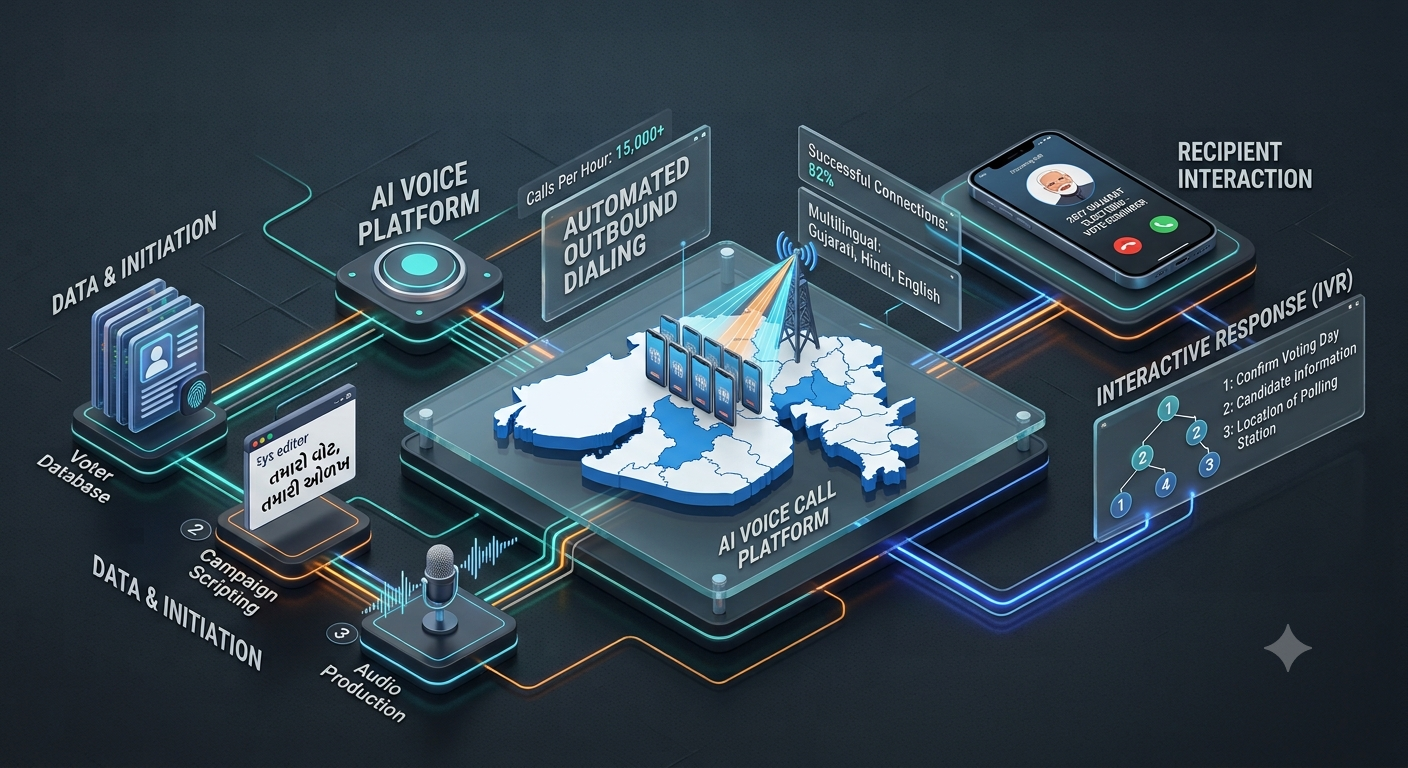
📞 Automated Voice Call Service for Gujarat Election 2027
🗳️ Introduction
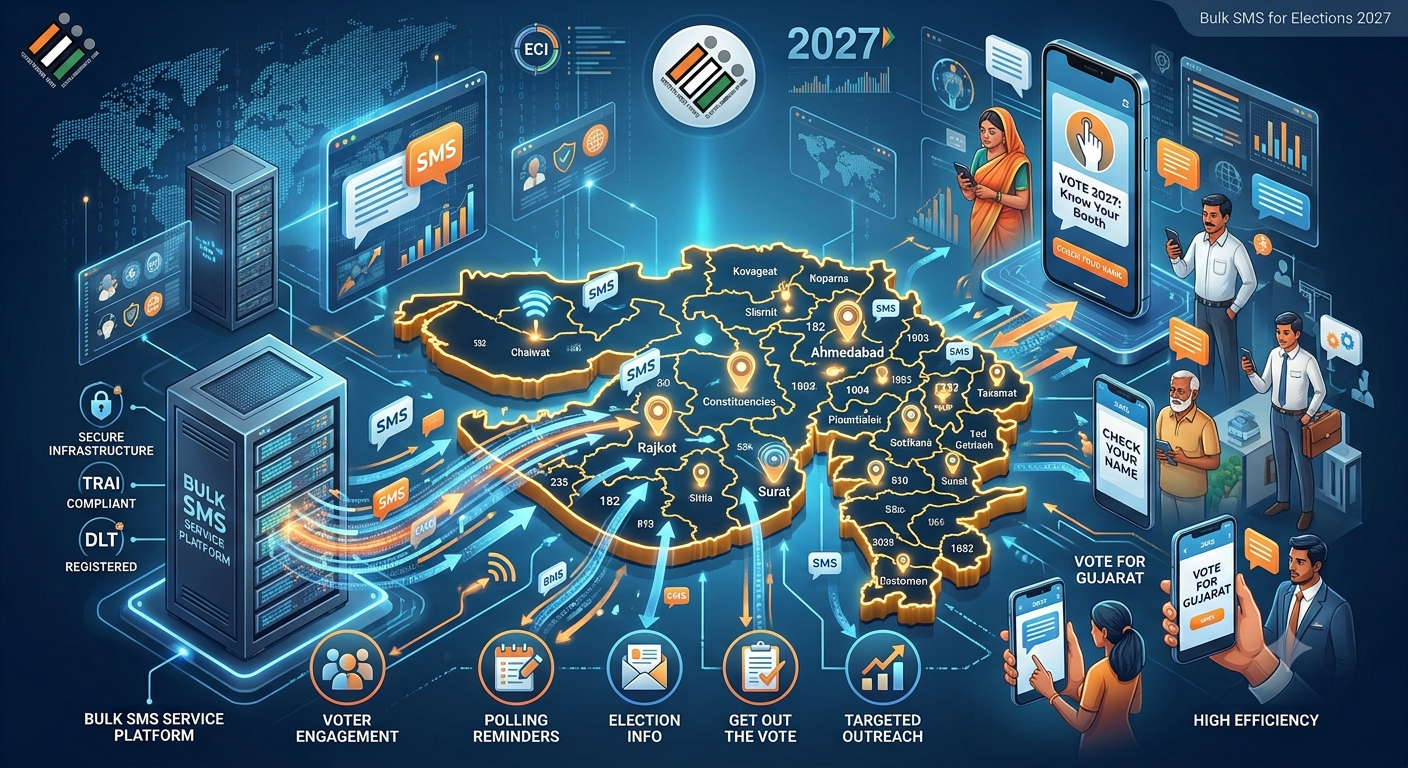
Election communication often involves reaching large audiences within limited timeframes. For communication teams working across Gujarat, managing information across constituencies, districts, cities, towns, and local communities requires a reliable and organized outreach process.
An Automated Voice Call Service can help distribute pre-recorded voice messages to a defined audience through a structured calling system. Instead of manually calling every contact, organizations can use automated voice communication for permitted announcements, event information, meeting reminders, organizational updates, and other appropriate communications.
For the Gujarat Election 2027, automated voice communication can become one component of a broader outreach strategy, particularly when information needs to be delivered in a direct and easily understandable format.
📞 What Is an Automated Voice Call Service?
An Automated Voice Call Service uses technology to place calls to a predefined list of phone numbers and play a recorded voice message after the call is answered.
The process can reduce the need for manual calling when the same information needs to be communicated to a large audience.
Depending on the approved use case, voice messages can communicate:
📢 Important announcements
📅 Meeting reminders
📍 Event venue and timing
🔔 Schedule updates
👥 Volunteer coordination
📋 Organizational information
🗣️ Local-language announcements
Automated calling should be used responsibly, with appropriate audience data, permissions, and compliance checks.
🎯 Why Automated Voice Calls Can Support Gujarat Election Communication
Gujarat has a large and diverse population spread across urban and rural areas. Communication requirements can vary significantly from one audience group to another.
Automated voice calls can provide several practical advantages.
⚡ 1. Faster Large-Scale Communication
A pre-recorded message can be distributed to a large, appropriately selected audience without requiring a caller to manually repeat the same information.
This can be useful for time-sensitive announcements and event-related communication.
🗣️ 2. Voice-Based Communication
Some information is easier to understand when delivered through voice rather than text.
A recorded message can communicate information using natural speech and, where appropriate, a regional language.
📍 3. Area-Based Outreach
A calling database can be segmented according to legitimate communication requirements such as:
Assembly constituency
District
City
Town
Local area
Event group
Volunteer group
Language preference
This allows communication teams to prepare more relevant voice messages.
🗣️ Multilingual Voice Communication
Language localization can make voice communication easier for the intended audience.
For Gujarat-focused communication, teams may consider appropriately reviewed Gujarati-language recordings where suitable.
Before recording a voice campaign, the script should be checked for:
Correct pronunciation
Names and locations
Dates and timings
Local terminology
Message clarity
Recording quality
A professional voice message should sound natural rather than like a long automated announcement.
📋 Common Uses of Automated Voice Calls
Automated voice communication can support several legitimate organizational activities.
📅 Event Reminders
A voice message can remind an intended audience about the date, time, and location of an upcoming event.
📍 Venue Updates
If an event location changes, a voice announcement can communicate the updated information to the relevant audience.
📢 Important Announcements
Short, clearly recorded announcements can be distributed to an appropriately selected contact group.
👥 Volunteer Coordination
Organizations can use structured voice communication to share coordination-related information with their volunteer teams.
🔔 Schedule Notifications
Voice calls can communicate changes to meeting times, event schedules, or organizational activities.
The actual use of automated calling must always be evaluated against applicable laws, regulations, consent requirements, and platform or telecom rules.
⚙️ How an Automated Voice Call Campaign Works
A professional voice campaign generally follows a structured process.
1. 📋 Prepare the Contact Database
Begin with a properly sourced and maintained database.
Avoid using random, outdated, scraped, or unauthorized contact lists.
2. 🧹 Clean the Data
Identify invalid numbers, duplicates, and outdated records before starting the campaign.
3. 🎯 Segment the Audience
Separate contacts according to the communication objective.
For example, different voice messages may be prepared for different areas or event groups.
4. ✍️ Create the Voice Script
The script should be:
Short
Clear
Easy to understand
Factually accurate
Appropriate for the intended audience
5. 🎙️ Record the Message
The recording should have clear pronunciation, suitable speed, and professional audio quality.
6. 🔍 Complete Compliance Checks
Before deployment, review the campaign against applicable telecom, election, consent, privacy, and calling requirements.
7. 🚀 Launch the Calling Campaign
The approved voice message can then be delivered to the relevant audience through the appropriate voice communication infrastructure.
8. 📊 Review Available Reports
Depending on the platform, reporting may include call attempts, answered calls, unsuccessful calls, and response information.
🔢 Response Capturing Through Voice Calls
One useful feature of automated voice communication is response capturing.
Instead of simply playing a message, an appropriate campaign workflow may allow recipients to select an option using their phone keypad.
For example:
“Press 1 for event information.”
“Press 2 to receive further details.”
“Press 3 to connect with the relevant team.”
The exact options should depend on the communication objective and the capabilities of the voice platform.
Response capturing can help transform a one-way voice announcement into a more measurable communication process.
📊 Measuring Automated Voice Campaign Performance
Large-scale voice communication should be monitored using available campaign reports.
Important metrics may include:
📞 Call Attempts
The number of calls initiated by the system.
✅ Answered Calls
The number of calls successfully answered.
❌ Unsuccessful Calls
Calls that were not connected or could not be completed.
🔢 Response Data
Where response capturing is enabled, teams can analyze keypad selections or other supported responses.
📈 Audience-Level Performance
Different audience segments can be compared to understand communication effectiveness.
Reporting can help teams improve future campaigns without simply increasing the number of calls.
⚠️ Telecom Compliance for Automated Voice Calls
Automated and promotional voice calls are subject to India's telecom regulatory framework. TRAI recognizes different categories of voice communication, including auto-dialer calls and robo calls, and consumers can register preferences concerning voice calls and automated calls.
TRAI's current guidance also states that senders using telecom resources must comply with applicable regulatory requirements. Its framework distinguishes promotional voice calls from service and transactional calls.
For automated voice campaigns, organizations should therefore verify:
📋 Sender requirements
📞 Applicable calling number series
🛡️ Consent and preference requirements
📑 Applicable telecom registrations
🗣️ Voice campaign category
⚠️ Current TRAI requirements
🗳️ Applicable election communication rules
TRAI has also issued directions concerning voice numbering, including a 2026 direction on the 1601 numbering series for service and transactional voice calls in sectors other than BFSI and government. Because telecom requirements can change, the applicable number series and routing should be verified before campaign deployment.
🚫 Common Mistakes to Avoid
❌ Using Unverified Contact Lists
Poor-quality databases can result in incorrect calls and compliance problems.
❌ Making Messages Too Long
Recipients are more likely to understand a short and focused message.
❌ Ignoring Calling Preferences
Automated calling should not disregard applicable customer preferences or consent requirements.
❌ Using Incorrect Information
Dates, venues, names, and schedules should be checked before recording.
❌ Using the Same Message for Every Audience
Location-specific or event-specific information may require different recordings.
❌ Ignoring Current Telecom Rules
Voice communication regulations can evolve. Campaign teams should verify current requirements before every large campaign.
✅ Best Practices for Automated Voice Calls in Gujarat
A professional campaign should follow these practices:
📋 Maintain a clean and appropriately sourced database.
🎯 Segment contacts according to the communication objective.
🗣️ Use Gujarati or other suitable languages where appropriate.
✍️ Keep the voice script concise.
🎙️ Use clear and professional audio.
📍 Verify every location and event detail.
📞 Check applicable calling-number requirements.
🛡️ Respect applicable consent and preference rules.
📊 Monitor available call reports.
🔢 Use response capturing where it genuinely adds value.
🗳️ Review the latest election communication requirements before deployment.
🚀 Building a Professional Voice Communication Workflow
A scalable automated voice campaign can follow this model:
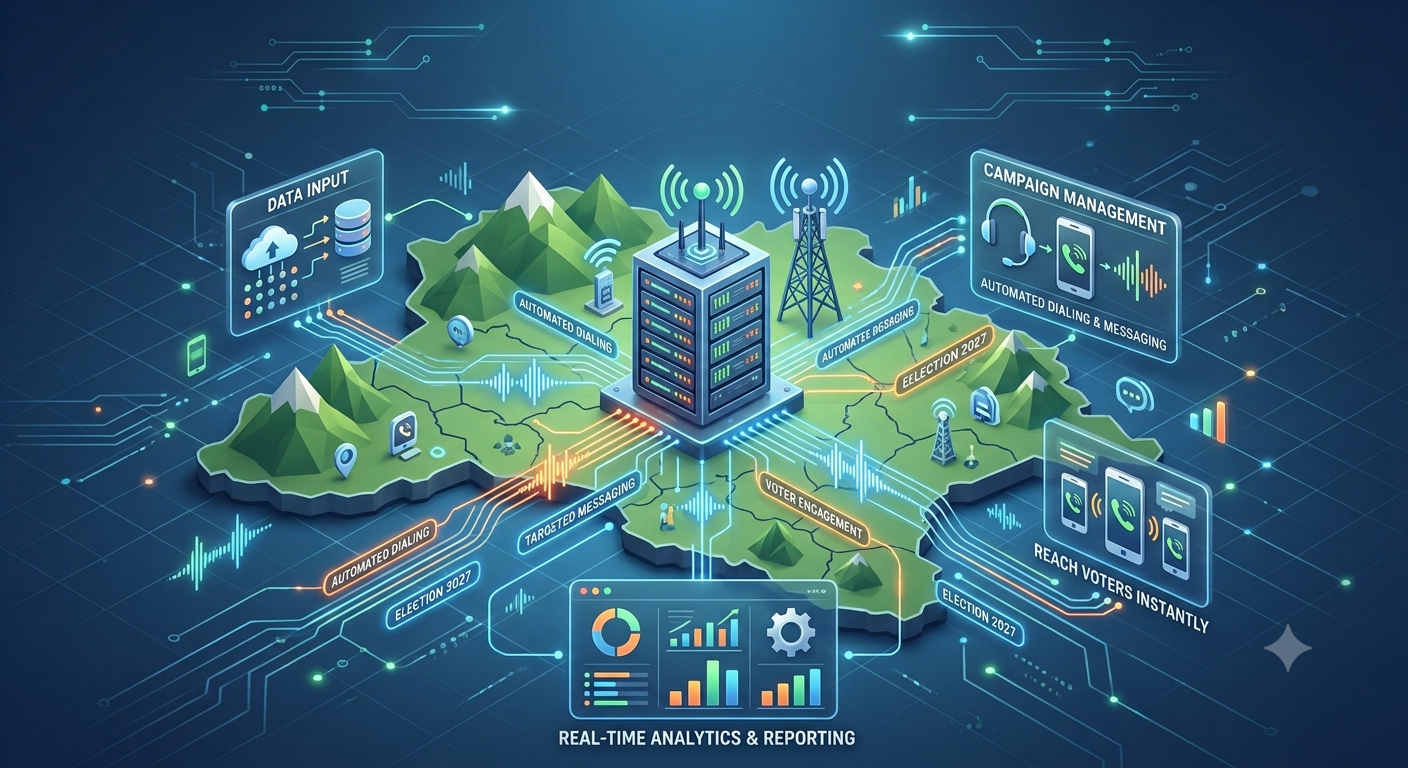
Contact Database → Data Cleaning → Audience Segmentation → Script Creation → Voice Recording → Compliance Review → Voice Distribution → Response Capturing → Reporting
This approach creates a repeatable communication system that can be adapted to different audiences and communication objectives.
For Gujarat, the workflow can be organized around constituencies, districts, events, volunteer groups, language preferences, and other legitimate audience categories.