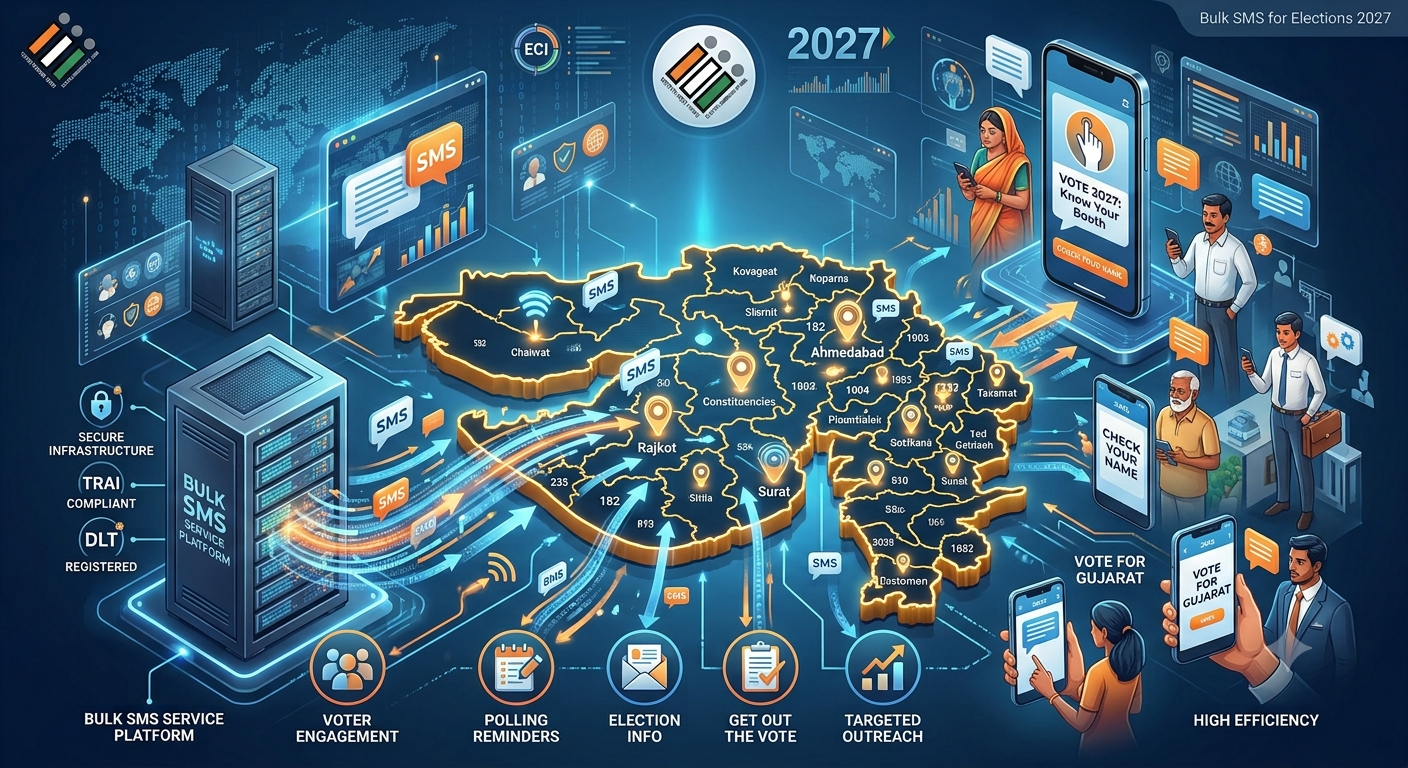
For the Gujarat election 2027 campaign, plan SMS and recorded voice calls in Gujarati first, with Hindi for migrant communities, across 182 constituencies that range from large cities to rural Saurashtra and Kutch. Use a registered sender, check certification, and stop bulk messages when the 48-hour silence period begins. WhatsApp's business platform is not open to political campaigns.
By Rohit Jadhav. Last reviewed 25 October 2026. This is operational guidance, not legal advice. Rules change, so confirm the current requirements for your election.
Gujarat has 182 assembly constituencies, from dense urban seats in cities like Ahmedabad and Surat to rural and coastal areas. Our guide to the 2027 state assembly elections places Gujarat in the later part of the cycle, so confirm the schedule with the Election Commission. A Gujarat election 2027 campaign has to handle both city and village voters. This single guide covers SMS, voice calls and WhatsApp, language, list building and the rules. It is part of our series on election campaign messaging rules. For help with the sending side, see our election campaign services in Gujarat. More guides are under Election Campaigns.
How do urban and rural Gujarat differ for messaging?
Urban seats have large, dense electorates, many apartment complexes and a mix of communities, including migrants from other states. Rural seats have villages, agricultural calendars and strong local institutions. Coastal and border areas have their own concerns.
In cities, the booth is often an apartment block or a neighbourhood, and a message about a local issue travels fast. In villages, a recorded voice message in the local speech can be heard on the phone by the whole household. Plan each separately. Use booth-level voter outreach to group contacts by booth and language, and check boundaries first, since delimitation can change them (see our delimitation guide).
How should Gujarati SMS be prepared?
Gujarati in Gujarati script for most voters, Hindi for migrant communities from other states and English for some urban professionals. Before you send a Gujarati SMS, check six things:
- Language accuracy. A competent Gujarati speaker reviews the wording.
- Clarity. One purpose per message.
- Encoding. Gujarati uses Unicode, which fits fewer characters in one part, so test how a message splits on a real phone.
- Links and contact details. Make sure each works.
- Sender and template set-up. The registration must match the message.
- Timing. Confirm the message is allowed at the time you plan to send it.
For more on handling several languages in one campaign, see multilingual campaign messaging.
Which channel should do which job?
Match the channel to the message, not the other way round. This is how we would split them for Gujarat.
| Channel | Best for in Gujarat | Watch out for |
|---|---|---|
| SMS | Meeting details, ward-level notices and polling-day facts, in Gujarati or Hindi; links to official information | Unicode parts; choosing language per booth |
| Voice call (recorded) | Rural households and older voters who prefer a recorded message in Gujarati | Script length and certification |
| IVR helpline (inbound) | Voter questions in Gujarati and Hindi | Staffing the line and answering missed calls |
| WhatsApp Business Platform | Not available to political campaigns under Meta's policy | Vendors and older guides that still offer it |
What is DLT registration, and is it enough?
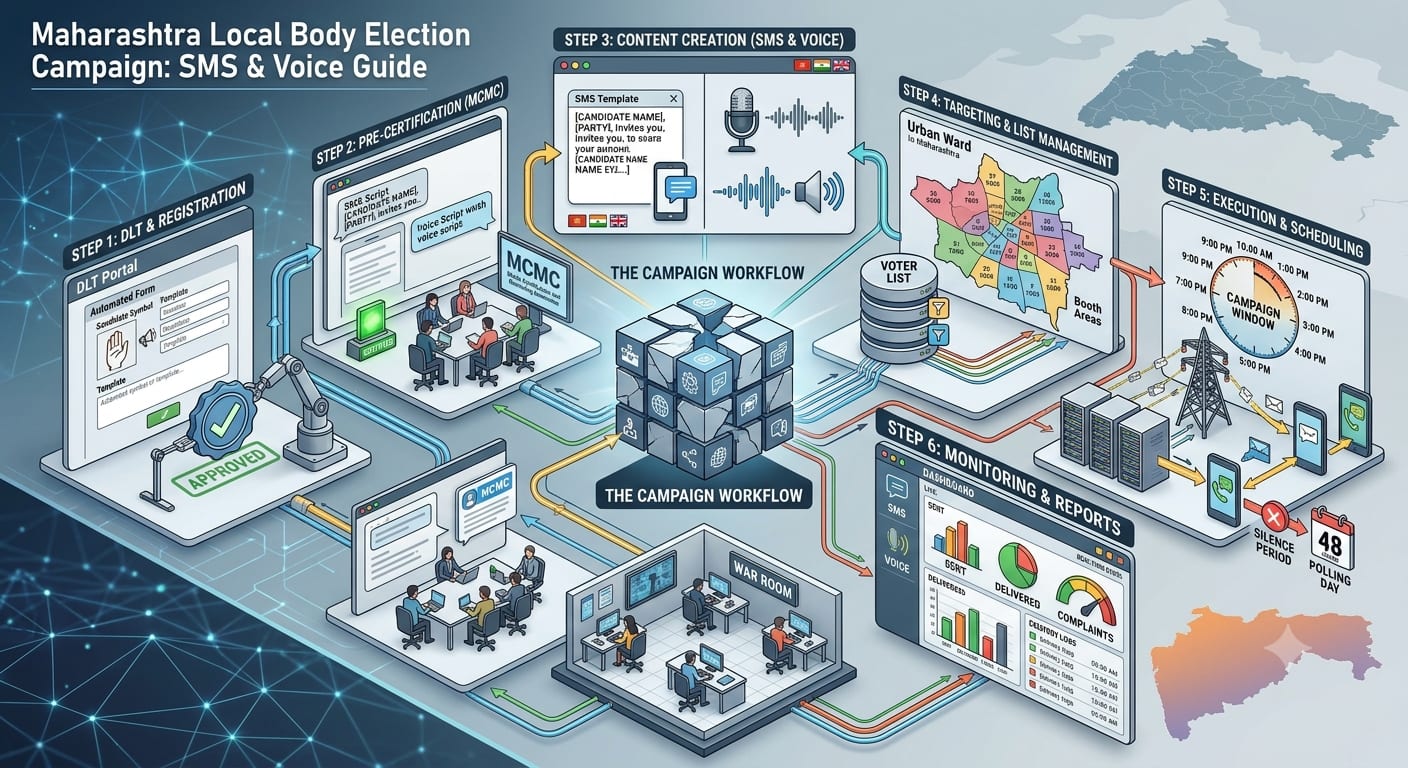
DLT is part of India's framework for commercial telecom messages. Depending on the category, a sender registers as a Principal Entity, registers headers and registers content templates, and consent arrangements apply. Nexcomm helps Indian businesses with DLT registration, header approval and template submission, and our guide to DLT registration for political party sender IDs explains the steps.
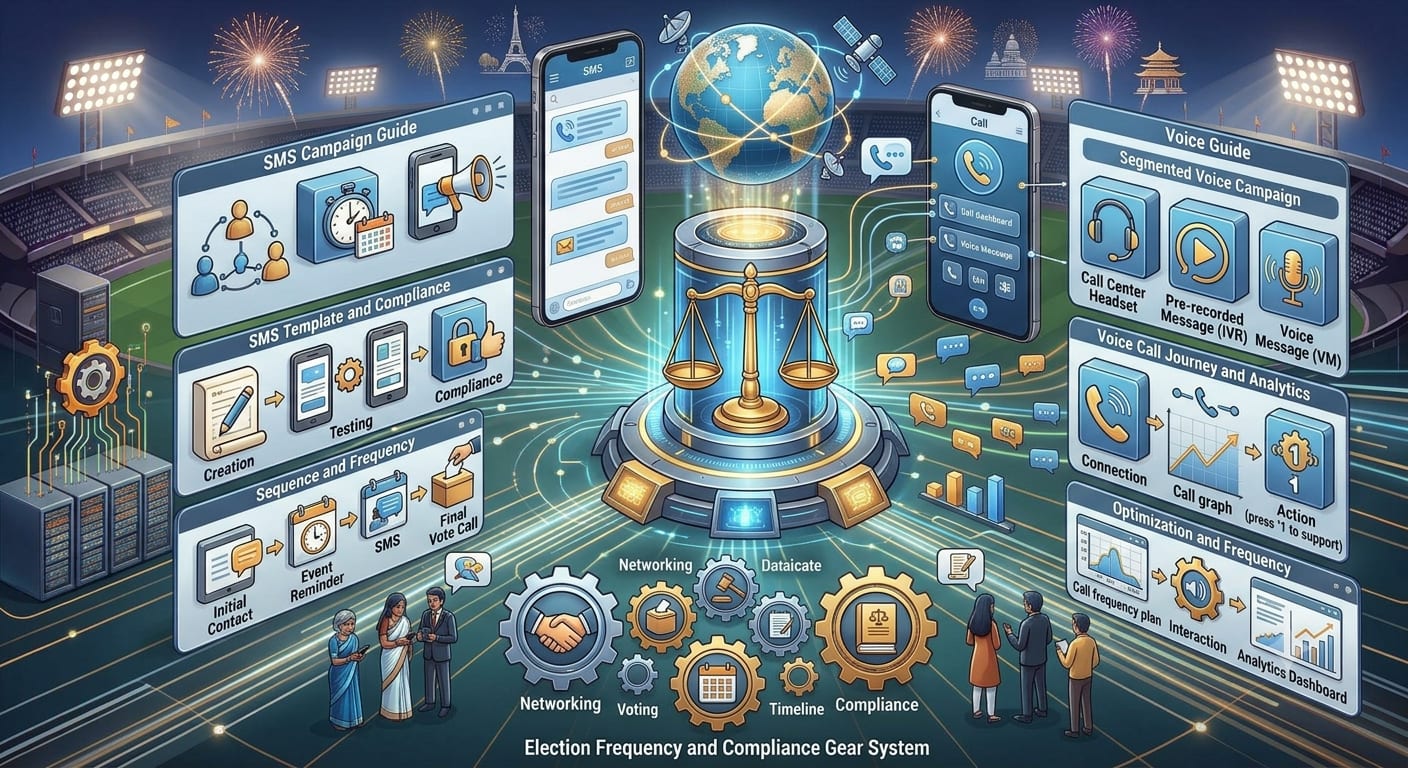
It is not enough on its own. DLT compliance, election approval and WhatsApp eligibility are three different questions, and satisfying one does not satisfy the others. A registered template does not mean the message is certified for an election. Name who checks each requirement, and keep a record of the checks.
How does a voice campaign work in Gujarat?
An automated call plays a recorded message when the person answers. Voice can be more suitable than SMS when the information is easier to follow spoken, when the audience prefers listening, or when mobile internet is poor. Prepare a short script, have a Gujarati speaker check names, places and wording, and record clearly. Ask your provider for call attempts, connections, unanswered calls and any keypad replies, and remember that a connected call is not proof that anyone listened. See bulk voice calls for political campaigns and the IVR voter helpline guide.
Can WhatsApp be used for a Gujarat campaign?
No. Meta's WhatsApp Business Messaging Policy, last updated 23 September 2026, prohibits use of the WhatsApp Business Platform by political parties, politicians, political candidates and political campaigns, and by services offered for political campaign strategy. Features such as templates, rich media, buttons, chatbots and shared inboxes do not change that for a campaign. Read what the policy says and what it leaves open. Meet the same needs in other ways: host posters and documents on the campaign's own website and link them in SMS, and use a recorded call for audio.
How do the rules apply to SMS and voice in Gujarat?
The same national rules apply everywhere. The Model Code of Conduct takes effect on announcement of the schedule (Press Information Bureau). Political advertisements on electronic media may need pre-certification, and a March 2026 report says the Commission's order for that round of polls covered bulk SMS and voice (newsonair.gov.in). Ask the District Election Officer's office what applies to your election.
The 48-hour silence period applies to the polling area, so if the election is held in more than one phase, it starts at different times in different seats. Check the hours for each constituency you work in. Our guide to the 48-hour silence period explains the detail.
How should a campaign split city and village plans?
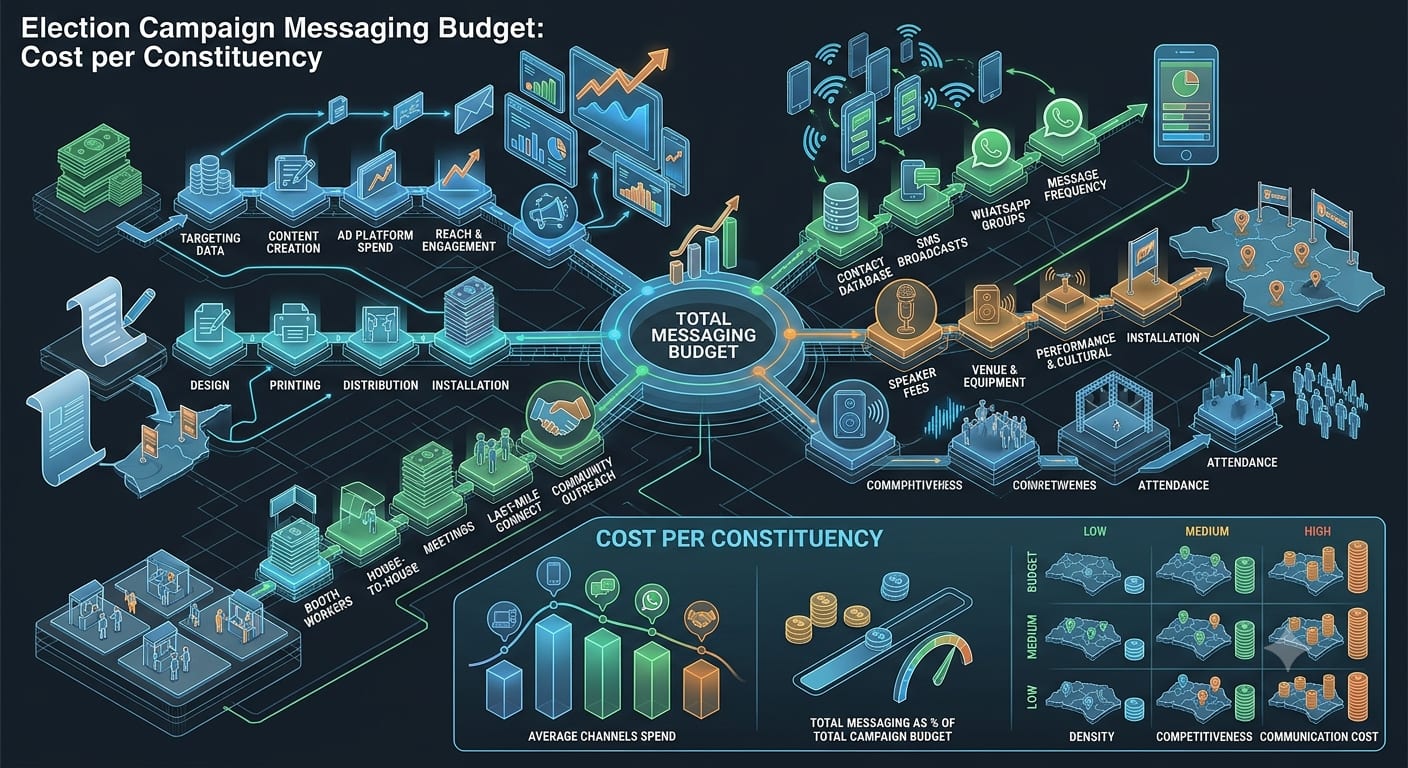
Run two playbooks. For city seats, build lists by apartment cluster or neighbourhood, send short Gujarati and Hindi SMS and use missed-call or helpline numbers for questions. For village seats, rely on voice and on local workers, and time the sends around the working day. Share the registration, templates and reporting across both, so that one team handles approvals. For cost planning, see election campaign messaging budgets.
How should you measure results?
Use the metrics that fit each channel and do not compare unlike ones. For SMS, look at submission and delivery reports, which help you find routing problems but do not show whether anyone read the message. For voice, look at attempts, connections and completion. Use the numbers to improve the process, and do not promise guaranteed delivery or results to anyone. Review what happened after each phase and write down what to change.
A worked example (hypothetical)
A candidate has 20,000 traceable numbers, split between two urban wards and several villages. This is an invented example. The team sends Gujarati and Hindi SMS to the urban list, grouped by neighbourhood, with a helpline number. For the villages it records a Gujarati message by a local volunteer and schedules calls for the evening, after the working day. It tracks replies and calls separately for city and village, finds that the village calls produce more questions and prepares a one-page answer sheet for volunteers. All scripts go through certification where required, and all sends stop before the silence period.
Common mistakes in Gujarat campaign messaging
- One plan for city and village. They respond to different channels.
- Gujarati only. Migrant voters in cities may need Hindi.
- Untested Unicode. Gujarati messages can split into extra parts.
- Confusing DLT compliance with election approval. They are different checks.
- Treating a contact list as permission. Having a number is not consent.
- Promising guaranteed delivery or results. Nobody can.
- Old booth maps. Check boundaries first.
- Bought lists and WhatsApp Business broadcasts. You cannot show consent, and Meta's policy bars political campaigns.
Frequently asked questions
How many constituencies does Gujarat have?
182 assembly constituencies. Our guide to the 2027 state assembly elections has the seat counts, and places Gujarat later in the cycle, so check the official schedule with the Election Commission.
Can political parties use the WhatsApp Business Platform for Gujarat campaigns?
No. Meta's policy, last updated 23 September 2026, prohibits its use by political parties, candidates and campaigns. Use SMS and voice, and link to your own website for posters and documents.
Is DLT registration enough to send political SMS?
No. DLT registers the sender, header and templates for telecom purposes. Election approval, such as certification where it applies, is a separate check, and so is platform eligibility.
Which language should Gujarat campaign SMS use?
Gujarati in Gujarati script for most voters, and Hindi for migrant communities. Test Unicode messages on a phone, since they can split into several parts.
Should a campaign choose SMS or voice calls?
Often both. SMS suits dates and venues, voice suits households and older voters who prefer to listen. Ask booth workers which works where.
When does the silence period start?
Forty-eight hours before polling closes in the polling area. If the election is held in phases, it begins at different times in different seats.
Sources checked
All checked on 25 October 2026.
- Press Information Bureau: Announcement of schedule for general elections 2024 (16 March 2024) (code of conduct takes effect on announcement)
- Election Commission of India press note ECI/PN/38/2024 (2 April 2024) (Section 126 text)
- All India Radio News: EC mandates pre-certification of political ads (21 March 2026) (news report; the Commission's own order was not found)
- The Tribune: Bihar polls, bulk SMS and voice messages during silence period (October 2025) (news report of an Election Commission note)
- TRAI, consolidated Telecom Commercial Communications Customer Preference Regulations, 2018 (registered senders and templates)
- Meta, WhatsApp Business Messaging Policy (last updated 23 September 2026) (Policy on Government and Political Use)
If you are planning Gujarat campaign messaging and want to talk through registration, certification and timing, you can reach our team through the contact page.