
Introduction
Businesses need reliable ways to reach customers, employees, students, patients and other audiences at scale. Email and messaging applications are useful, but they are not always the best fit for urgent announcements, audiences with limited internet access or communications that are easier to understand when heard.
New to voice calling? Start with our guide to how a bulk voice call service works in India.
A bulk voice call service helps organisations deliver a recorded or automated voice message to many recipients without calling every person manually. Depending on the platform and campaign setup, recipients can hear announcements, receive reminders, respond through keypad inputs or connect to a representative.
The most useful bulk voice call service use cases go beyond promotional campaigns. Schools can notify parents about attendance and closures, hospitals can remind patients about appointments, financial institutions can send appropriate payment reminders, and businesses can follow up with customers or qualify interested leads.
This guide explains how organisations across 12 industries can use bulk voice calls, which campaign types suit each situation, how interactive features can improve responses, and what to consider before launching a campaign.
What is a bulk voice call service?
A bulk voice call service, also called voice broadcasting or outbound voice calling, enables an organisation to send a recorded or generated voice message to a list of telephone numbers through an automated calling platform.
Common applications include:
Appointment and event reminders
Service updates and operational announcements
Customer feedback and surveys
Promotional announcements where permitted
Payment and renewal reminders
Public information and emergency notifications
Lead qualification through keypad responses
Follow-up workflows connected to business systems
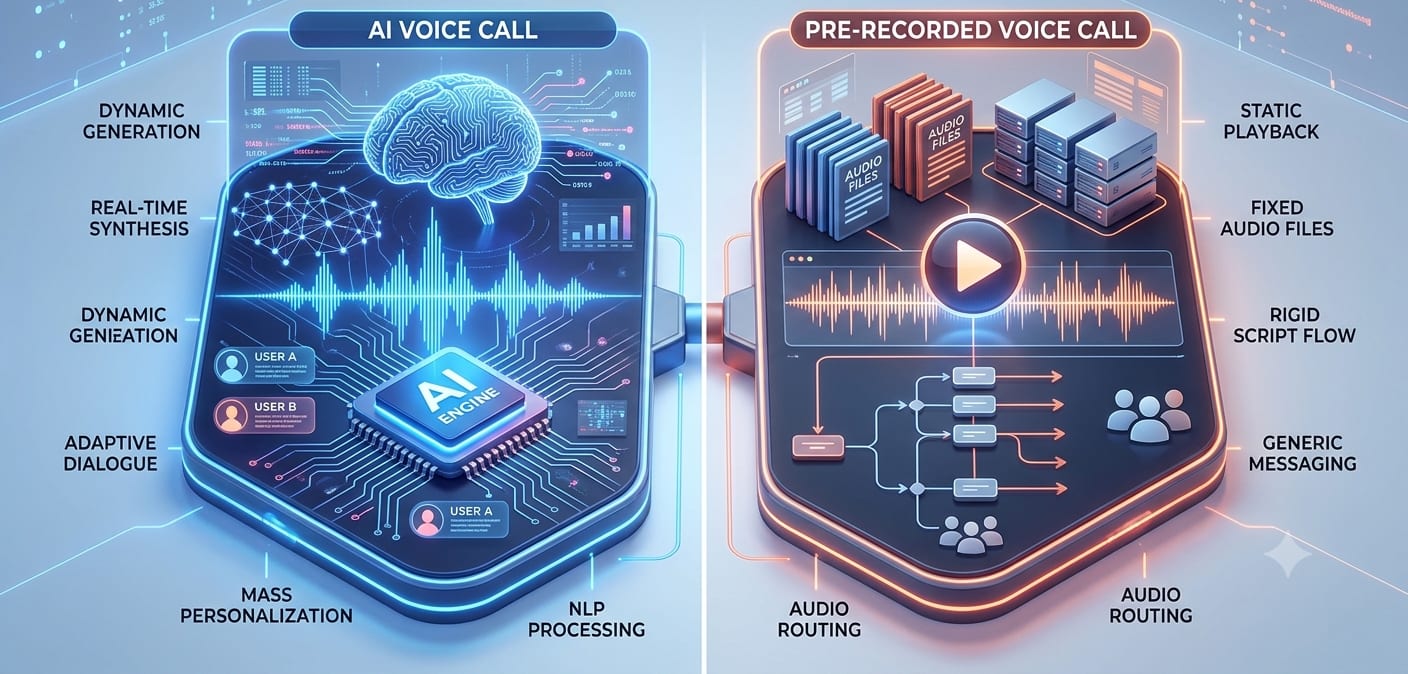
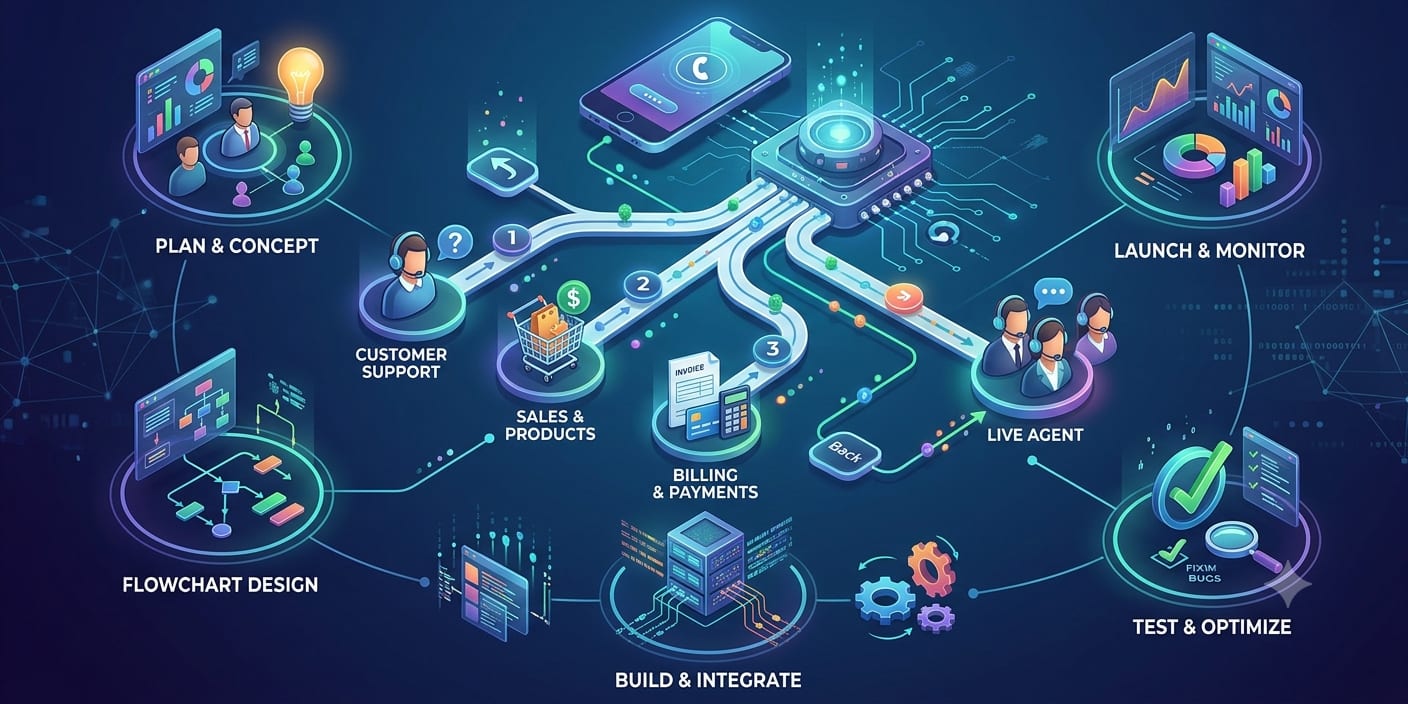
Some campaigns simply play a message. Others use interactive voice response (IVR), allowing recipients to press a number to indicate interest, answer a survey question or request a follow-up.
The right approach depends on the audience, the purpose of the communication, the recipient's consent and the applicable telecom requirements.
12 bulk voice call service use cases across industries
1. Education: Schools, colleges and coaching institutes
Educational institutions communicate with students, parents, guardians, faculty and prospective applicants. Manually calling every family can take considerable administrative time, particularly when a message needs to reach a large group quickly.
Common use cases
Student attendance notifications to parents or guardians
Examination schedules and result-related announcements
School holidays and unexpected closures
Fee payment and deadline reminders
Parent-teacher meeting announcements
Admission enquiries and application deadlines
Changes to class timings, transport or campus arrangements
Urgent campus or weather-related notifications
Practical example
A school can schedule an automated voice message to inform parents that the school will remain closed due to severe weather. A separate message can be sent to the relevant class or transport group rather than calling every family individually.
How to make the campaign more useful
Use clearly recorded messages, speak at a moderate pace, identify the institution at the beginning and provide a simple next step. For routine announcements, schedule calls in advance. For sensitive student information, use appropriate verification and privacy safeguards rather than revealing unnecessary details in a recorded message.
Best suited for: Schools, colleges, coaching centres, universities and education groups.
2. Healthcare: Hospitals, clinics and diagnostic centres
Healthcare providers need to communicate appointment details, service updates and general health information in a timely manner. Voice reminders can be useful for patients who may not regularly check email or messaging applications.
Common use cases
Appointment reminders
Follow-ups for scheduled consultations
Diagnostic centre visit reminders
Health camp and vaccination programme announcements
Changes to clinic timings
General preventive-health awareness campaigns
Hospital service updates
Requests to contact the provider about an upcoming visit
Practical example
A clinic can send a reminder one day before a scheduled appointment. The message can mention the clinic name, appointment date and time, and a number to call if the patient needs assistance.
How to make the campaign more useful
Keep messages concise and protect patient confidentiality. Avoid including unnecessary diagnoses, test results or other sensitive health details in a voice message that another person might hear. Use approved patient contact information and follow applicable privacy and healthcare requirements.
Best suited for: Hospitals, clinics, diagnostic laboratories, dental practices and healthcare networks.
3. Real estate: Developers, brokers and property consultants
Real estate teams often need to follow up with prospects about property launches, site visits, open houses and project updates. Automated voice calls can help deliver an announcement to an appropriate, permissioned prospect list.
Common use cases
New project launch announcements
Site visit reminders
Open house and property exhibition invitations
Follow-up on property enquiries
Project milestone or possession updates
Appointment confirmations
Lead qualification for interested buyers
Follow-up requests for a sales representative
Practical example
A property developer can invite prospective buyers to a weekend site visit. Interested recipients can press a designated key to request a callback, if the platform supports keypad response capture.
How to make the campaign more useful
Segment the contact list by location, property type, budget range or the original enquiry where that information was lawfully collected. Make the offer clear and avoid exaggerated claims about prices, returns, availability or guaranteed appreciation.
Best suited for: Real estate developers, property brokers, channel partners and commercial property consultants.
4. Banking, NBFCs and financial services
Financial organisations communicate about payment deadlines, account services and other customer matters. Voice campaigns may support certain approved notifications, but the message type and delivery process must match the organisation's regulatory and security obligations.
Common use cases
Loan or EMI payment reminders
Credit card bill due-date reminders
Service and process notifications
Customer service follow-up requests
Financial literacy announcements
Appropriate product information for eligible audiences
Requests to contact the official support team
General fraud-awareness messages
Practical example
An authorised lender can remind a customer that a scheduled payment is approaching and direct them to the lender's official channel for account-specific details.
How to make the campaign more useful
Identify the organisation clearly. Never ask recipients to disclose passwords, PINs, one-time passwords or full payment credentials in response to a voice call. Avoid revealing sensitive financial details to anyone who answers a shared phone. Use the organisation's approved communication process and applicable financial-sector rules.
Best suited for: Banks, NBFCs, lending companies, insurance providers and other regulated financial organisations.
5. E-commerce and retail
Retailers and online businesses can use voice calls to support customer service, announce relevant offers and communicate selected order or delivery information.
Common use cases
Store opening announcements
Seasonal and festival sale announcements
Order or delivery-related updates where appropriate
Loyalty programme reminders
Product launch announcements
Customer feedback requests
Requests to contact support about an order
Follow-up on relevant customer enquiries
Practical example
A regional retailer can notify opted-in customers about a store opening in their area. The call can include the opening date, location and a short invitation to visit.
How to make the campaign more useful
Target audiences by relevant preferences, store location or customer relationship. Separate promotional campaigns from necessary service notifications, and make sure marketing communications comply with the applicable consent and calling rules.
Best suited for: Retail chains, supermarkets, online stores, consumer brands and local businesses.
6. Government, public services and community organisations
Public bodies and community organisations may need to communicate time-sensitive information to large populations, including people who do not use mobile data or messaging applications regularly.
Common use cases
Public health awareness announcements
Weather and disaster preparedness information
Community meeting announcements
Utility service interruption notices
Public programme and service updates
Emergency instructions from authorised authorities
Civic information and public awareness drives
Relevant public-service reminders
Practical example
An authorised local agency can broadcast a concise announcement about a public meeting or an official service disruption. For emergencies, the message should clearly identify the issuing authority and explain what recipients should do next.
How to make the campaign more useful
Use verified information, accessible language and a clearly identified source. For emergency communications, use the appropriate authorised alerting process rather than relying on an ordinary marketing campaign as a substitute.
Best suited for: Government departments, municipal bodies, public-service organisations and authorised community programmes.
7. Political organisations and election campaigns
Political organisations and campaign teams may use voice communication to distribute approved campaign messages, event information and public announcements to relevant audiences. This use case requires particular attention to election rules, telecom requirements, consent, audience selection and any applicable permissions.
Common use cases
Rally and public meeting announcements
Candidate event reminders
Campaign schedule updates
Public policy or manifesto information
Volunteer coordination
Requests for supporters to attend an authorised event
Campaign feedback or survey invitations, where permitted
Information about official campaign activities
Practical example
An authorised campaign team can send a short event announcement to an eligible audience, stating the event details and the official campaign identity.
How to make the campaign more useful
Keep the message factual, identify the sponsoring organisation and use appropriately collected contact data. Check applicable Election Commission directions, model code requirements, telecom rules and any required permissions before launch. Do not assume that political content is automatically exempt from consent, registration or calling restrictions.
Best suited for: Political parties, authorised campaign organisations, election consultants and campaign service providers.
8. Logistics, courier and transportation
Logistics providers coordinate deliveries, route changes, dispatches, customer availability and other time-sensitive activities. Voice calls can support selected operational notifications when a quick spoken update is useful.
Common use cases
Delivery attempt notifications
Requests to confirm customer availability
Dispatch or collection updates
Route or schedule changes
Driver and field-team coordination
Pickup reminders
Service disruption announcements
Follow-up requests when a delivery needs attention
Practical example
A courier company can notify a customer that a delivery attempt is planned and provide an official contact route for rescheduling. The message should not expose unnecessary personal or shipment information to an unintended recipient.
How to make the campaign more useful
Connect calling workflows to the delivery or ticketing system where appropriate. Trigger messages from verified status changes, keep customer instructions simple and provide a clear path to human assistance when the issue cannot be resolved automatically.
Best suited for: Courier companies, transport operators, logistics networks, field-service teams and delivery businesses.
9. Insurance and policy servicing
Insurance providers may need to communicate renewal dates, appointment schedules, service requests and general policy information to existing customers.
Common use cases
Policy renewal reminders
Premium payment due-date notifications
Requests to contact an authorised representative
Appointment and document-submission reminders
Claims-process status notifications where appropriate
Customer service follow-ups
General risk-prevention awareness
Service announcements
Practical example
An insurance provider can send a reminder that a policy renewal date is approaching and direct the customer to the insurer's official website or verified customer service number.
How to make the campaign more useful
Protect policyholder data, avoid promising claim approval or financial outcomes, and direct account-specific questions to a verified channel. Follow applicable insurance-sector requirements and the organisation's approved communication procedures.
Best suited for: Insurance companies, brokers, authorised agents and policy servicing teams.
10. Automobile dealerships and service centres
Automotive businesses need to remind customers about scheduled servicing, vehicle collection, test drives and service campaigns.
Common use cases
Vehicle service appointment reminders
Test-drive confirmations
Vehicle delivery updates
Service due-date reminders
Workshop schedule changes
New model launch invitations
Customer satisfaction surveys
Follow-up on service enquiries
Practical example
A dealership can remind a customer about an upcoming service appointment and provide a callback option to reschedule.
How to make the campaign more useful
Use accurate booking information and distinguish service reminders from promotional offers. Keep the call short and ensure the customer can reach the correct dealership or service centre if they need help.
Best suited for: Automobile dealers, service centres, vehicle rental companies and automotive networks.
11. Travel, hospitality and event management
Travel and hospitality businesses manage bookings, event schedules and customer expectations. Voice calls can be useful when customers need a clear reminder or a time-sensitive update.
Common use cases
Booking and event reminders
Tour departure announcements
Hotel check-in information
Schedule or venue changes
Conference and seminar reminders
Reservation follow-up requests
Event feedback collection
Customer service notifications
Practical example
An event organiser can remind registered attendees about the event start time, venue and entry instructions. If a venue changes, a follow-up call can help communicate the update to the registered audience.
How to make the campaign more useful
Verify dates, times and venue details before sending. For travel changes or cancellations, direct customers to the official booking or support channel for the latest account-specific information.
Best suited for: Hotels, travel operators, event organisers, tour companies and conference managers.
12. Utilities, NGOs and membership organisations
Utility providers, nonprofits and membership-based organisations often need to share service information, coordinate participation or send reminders to a large group.
Common use cases
Planned maintenance announcements
Service interruption updates
Bill or subscription reminders where permitted
Community programme announcements
Volunteer meeting reminders
Donation campaign information, where permitted
Membership renewal notices
Survey and participation requests
Practical example
A utility provider can notify affected customers about planned maintenance and provide a verified source for updates. An NGO can invite registered volunteers to an upcoming community event.
How to make the campaign more useful
Use relevant contact lists, explain why recipients are receiving the call and respect applicable opt-out preferences. Keep financial requests transparent and direct people to verified channels.
Best suited for: Utility providers, NGOs, charitable organisations, associations and membership businesses.
Quick comparison: which industries benefit from which voice campaign?
Industry | Common campaign objective | Example message |
|---|---|---|
Education | Parent and student communication | Exam schedule or school closure |
Healthcare | Appointment attendance | Clinic visit reminder |
Real estate | Lead follow-up | Site visit invitation |
Banking and finance | Customer servicing | Payment due-date reminder |
Retail and e-commerce | Customer engagement | Store opening or relevant offer |
Government and public services | Public information | Service disruption announcement |
Political organisations | Event communication | Rally or public meeting information |
Logistics | Delivery coordination | Delivery attempt or pickup update |
Insurance | Policy servicing | Renewal reminder |
Automotive | Service coordination | Workshop appointment reminder |
Travel and hospitality | Booking and event communication | Departure or event reminder |
Utilities and NGOs | Community coordination | Maintenance or programme update |
These are typical applications, not a guarantee that every message type is permitted for every audience. The organisation should confirm the appropriate communication category, consent basis and applicable rules before each campaign.
Types of bulk voice campaigns businesses can run
Different objectives call for different campaign designs. A useful campaign starts with the recipient's needs, rather than the technology alone.
1. Informational and notification calls
These calls communicate a relevant update, such as a changed appointment, school closure, delivery status or service interruption.
Use them when: The recipient needs clear information and a simple next step.
2. Reminder calls
Reminder campaigns help people remember appointments, deadlines, scheduled events or renewals.
Use them when: The date or action is already relevant to the recipient, and the communication is permitted.
3. Promotional voice campaigns
Promotional calls share eligible offers, product announcements, event invitations or service information.
Use them when: The audience and message meet the applicable consent, registration, calling-hour and telecom requirements.
4. Interactive voice campaigns using IVR
An interactive campaign can ask a recipient to press a key to express interest, choose an option or request a callback, if the platform supports those functions.
Use them when: You need a simple response instead of only playing a recorded announcement.
For example, a property business might invite recipients to press 1 for a callback about a site visit. The prompt should explain the choice clearly, and any follow-up should respect the recipient's response and communication preferences.
5. Survey and feedback calls
A short voice survey can collect a small number of responses after a service interaction or event. Some platforms capture keypad responses; others may require a different workflow.
Use them when: You have a clear research question and can explain how the feedback will be used.
6. Emergency and urgent announcements
Voice communication may be one component of an authorised emergency notification plan.
Use them when: The organisation has authority to issue the announcement and has chosen a delivery method suitable for the urgency and audience. Do not rely on a standard promotional calling workflow as the sole emergency system.
How to make bulk voice calls more effective
The success of a voice campaign depends on more than the number of calls attempted. Message quality, audience relevance, timing, recipient permissions and the follow-up process all matter.
1. Define one clear campaign objective
Choose the main outcome before writing the script. Is the call meant to inform, remind, invite, collect feedback or request a response?
A call trying to communicate five different things is harder to understand and more likely to be ignored.
2. Segment the contact list
Where permitted, organise recipients by a meaningful attribute such as service location, appointment date, customer relationship, language preference or the original enquiry.
For example, a hospital should send appointment reminders only to the relevant patients, while a retailer may separate service updates from promotional campaigns.
3. Write for listening, not reading
Voice messages need a different writing style from SMS or email.
Introduce the organisation early.
Use short sentences and familiar words.
Mention the most important information first.
Avoid long lists of dates, numbers and conditions.
Give one clear next step.
Test the script by listening to it at the intended speed.
4. Use the audience's preferred language
Regional-language support can make information easier to understand. Choose a language that is appropriate for the audience, and have a competent speaker review the script before recording or generating the audio.
Do not assume that everyone in one geographic area prefers the same language.
5. Choose suitable calling times
Plan around the purpose of the message, recipient expectations and applicable calling restrictions. An appointment reminder may need a different schedule from a non-urgent announcement.
For urgent situations, follow the relevant authorised emergency procedure.
6. Use interactive options only when they help
IVR and keypad responses can support interest capture, surveys or simple routing. They also add complexity, so avoid unnecessary menu choices.
Tell recipients what each key does, make the prompt easy to follow and provide an alternative contact route where practical.
7. Prepare the follow-up process before launch
If recipients can request a callback, someone needs to handle it. Assign responsibility for follow-ups, define response timelines and connect results to the appropriate team or system.
Without this step, a campaign can generate interest that never gets addressed.
8. Test a small batch first
Before sending to the full audience, verify:
Audio clarity and pronunciation
Correct organisation and campaign details
Recipient list quality
Call flow and keypad inputs, if enabled
The callback or support number
The approved campaign schedule
Reporting and status tracking
A small test helps identify mistakes before they affect a larger campaign.
What to look for in a bulk voice call service provider
The best provider depends on your volume, audience, workflow and compliance requirements. Evaluate the following capabilities rather than choosing on price alone.
Call delivery and reporting
Check which call outcomes the platform reports, such as answered, unanswered, busy or failed, and whether the definitions are clearly explained. A call attempt is not the same as a person listening to the complete message.
Audio quality and language support
Confirm the supported audio formats, recording options and language capabilities. Test the actual voice output before launching a campaign.
Scheduling and retry controls
Look for controls that let authorised users schedule campaigns and configure appropriate retry behaviour. Retries should not create excessive or unwanted calls.
IVR and keypad response capture
If you need recipients to select an option, verify that the platform supports the required keypad inputs and that the responses can be exported or integrated into the next workflow.
API and system integration
API access may help trigger calls from a CRM, appointment system, service desk or internal application. Confirm the actual endpoints, authentication method, reporting fields and error-handling process before committing to an integration.
Compliance controls
Ask how the provider supports required consent handling, list screening where applicable, caller identification, approved campaign types, opt-out processing and audit records. Do not treat a provider's marketing claim as a substitute for your own compliance checks.
Pricing transparency
Understand how billing works before launching. Depending on the provider and plan, charges may be based on connected duration, billing pulses, call volume or other terms. Confirm how unanswered calls, retries, taxes and additional features are handled.
For businesses evaluating an automated calling solution, Nexcomm's bulk voice call service page provides more information about its voice campaign offering.
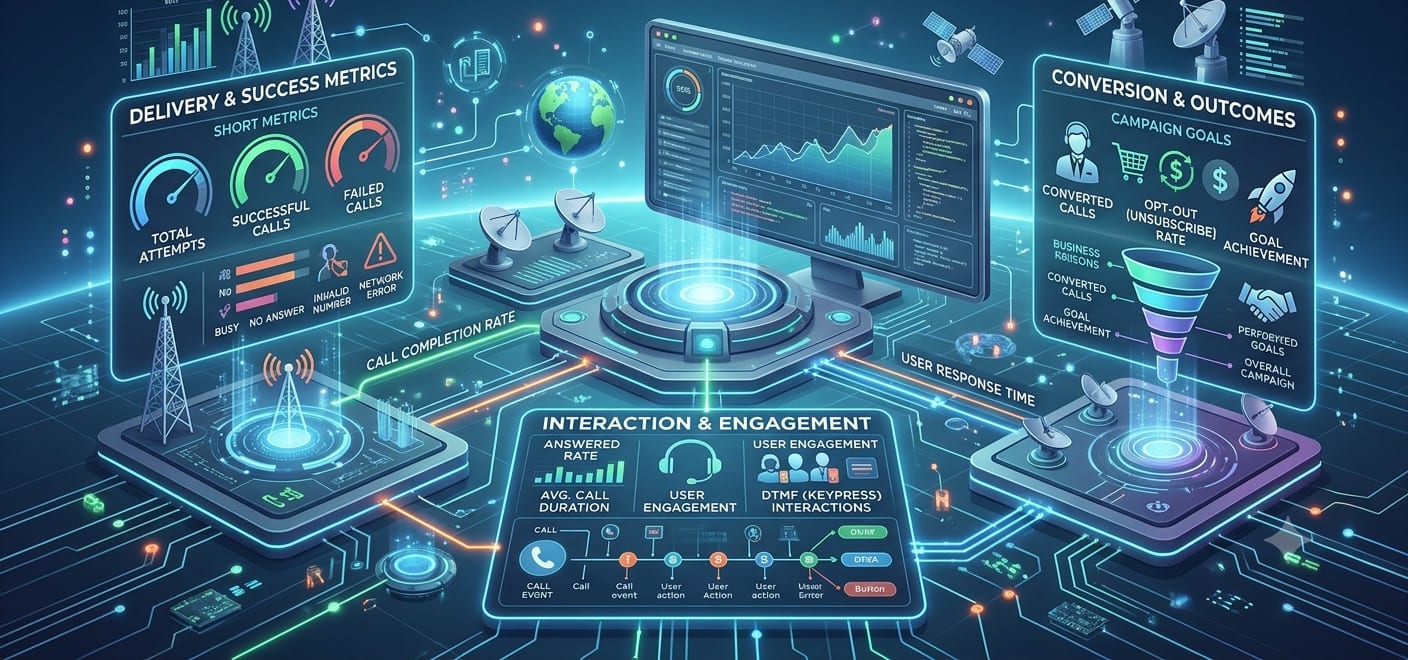
How to measure a bulk voice campaign
Choose metrics that match the objective. A reminder campaign and a promotional campaign should not be judged in exactly the same way.
Metric | What it tells you | Why it matters |
|---|---|---|
Calls attempted | How many numbers the platform tried to reach | Shows campaign volume |
Answer rate | The proportion of attempted calls answered, using a clearly defined denominator | Helps assess reachability |
Average connected duration | How long answered calls remained connected on average | Provides a rough engagement signal, not proof of listening |
Completion rate | The proportion of connected calls that reached the defined end of the message, if measurable | Helps assess whether the message was completed |
Keypress response rate | The proportion of eligible calls that generated a keypad response | Useful for interactive campaigns |
Callback requests | Number of recipients requesting follow-up | Helps plan sales or support capacity |
Appointment attendance or completion | The downstream outcome relevant to the campaign | Helps evaluate practical value |
Cost per meaningful outcome | Campaign cost divided by the defined successful outcome | Supports comparison with other channels |
Use a consistent measurement period and a clearly defined denominator for every rate. Compare campaigns with similar audiences, purposes and schedules. Avoid treating answer rates as proof of conversion or assuming that a higher number of calls automatically means better results.
Bulk voice calls vs SMS and WhatsApp
Voice calls, SMS and WhatsApp each solve different communication problems. The best choice depends on the content, audience, required response and permission to contact the recipient.
Requirement | Bulk voice calls | SMS | |
|---|---|---|---|
Spoken explanation | Well suited | Not available | Audio or text options, depending on the format |
Short written information | Less suitable for detailed text | Well suited | Well suited |
No mobile data required to receive the communication | Calls use the mobile network; service availability still matters | SMS uses the mobile network | Internet access is generally required |
Rich images and interactive visual content | Not the main strength | Limited | Supports richer content and interactive formats where available |
Keypad-based responses | Possible with supported IVR | Not a native voice keypad interaction | Uses supported conversation interactions |
Best-fit examples | Spoken reminders, announcements and simple surveys | Short alerts, codes and text notifications | Two-way conversations, rich updates and customer support |
These are general channel differences, not performance guarantees. A multi-channel approach may be appropriate when each channel has a clear role and the recipient's preferences and applicable rules are respected.
Compliance considerations for bulk voice calls in India
Before launching a campaign in India, organisations should verify the current telecom requirements that apply to the specific call type, sender, recipient list and use case. Requirements may differ between service-related communications, promotional activity and other regulated categories.
At a minimum:
Use contact data collected and used on an appropriate lawful basis.
Confirm applicable consent, registration and recipient-preference requirements.
Follow the relevant rules for caller identity, calling times and campaign classification.
Respect opt-out requests and maintain suppression records where required.
Do not misrepresent the sender or use deceptive scripts.
Protect personal information and restrict access to campaign data.
Check additional sector-specific rules for finance, healthcare, insurance, elections and public communications.
Keep appropriate records of approvals, scripts, contact-list processing and campaign outcomes.
For election-related communications, verify the current Election Commission requirements and any relevant permissions before a campaign is scheduled. For regulated financial or healthcare messages, follow the organisation's approved procedures and applicable sector rules.
Important: A bulk voice call provider can offer technical and operational controls, but the sender remains responsible for ensuring that the campaign is lawful and appropriate. Check the latest official requirements before launch rather than relying solely on a generic checklist.
Frequently asked questions
1. What are the most common bulk voice call service use cases?
Common uses include appointment reminders, school announcements, payment reminders, delivery updates, event invitations, public information messages, customer feedback surveys and eligible promotional campaigns. The most suitable use depends on the audience and purpose.
2. Can schools use bulk voice calls to contact parents?
Yes, schools may use voice campaigns for appropriate communications such as attendance alerts, examination schedules, holiday announcements and meeting reminders. They should use accurate contact records, protect student information and follow applicable communication requirements.
3. How can hospitals use automated voice calls?
Hospitals and clinics can use them for appointment reminders, clinic timing changes, health camp announcements and other suitable patient communications. Sensitive medical information should not be disclosed unnecessarily in a recorded message.
4. Can bulk voice calls help real estate companies generate leads?
They can help communicate project announcements or site-visit invitations to an eligible audience. If the platform supports IVR, interested recipients may be able to request a callback through a keypad response. Results depend on audience relevance, message quality and follow-up.
5. Can bulk voice calls be used for political campaigns in India?
Political organisations may consider voice calls for permitted event announcements and other eligible communications, but they must check current telecom rules, applicable election requirements, permissions and restrictions before launching a campaign. Political purpose does not automatically remove compliance obligations.
6. Do bulk voice calls require an internet connection on the recipient's phone?
The recipient generally receives a telephone call through the mobile network, rather than through a data-based messaging application. Actual reach still depends on network coverage, phone availability, carrier handling and whether the call is answered.
7. What is the difference between bulk voice calls and IVR?
A basic bulk voice call may play a recorded message without requiring a response. IVR adds an interactive layer that can let recipients navigate options or enter keypad responses, provided the platform supports those features.
8. Can bulk voice calls be made in regional languages?
Many voice campaign platforms support recorded audio in multiple languages. The available languages and any text-to-speech capabilities depend on the provider. Scripts should be checked for accurate pronunciation, clarity and cultural suitability.
9. How much does a bulk voice call service cost?
Pricing varies by provider, connected-call duration, billing unit, campaign volume, features and other contractual terms. Ask for a written rate card and confirm how failed calls, unanswered calls, retries, taxes and IVR features are charged.
10. How can a business measure whether a voice campaign worked?
Start with the campaign objective. Measure delivery and answer outcomes, message completion where available, keypad responses, callback requests and the relevant downstream result, such as an attended appointment. Compare like-for-like campaigns and account for the cost of each meaningful outcome.
11. Can bulk voice calls be triggered through an API?
Some providers offer APIs that let businesses trigger calls from approved software workflows. Confirm the provider's actual API capabilities, authentication, response fields, rate limits, reporting and error handling before implementing an integration.
12. How should a business choose between voice calls, SMS and WhatsApp?
Choose voice when spoken information is useful, SMS for concise text-based notifications, and WhatsApp when an eligible audience needs a richer or conversational experience. The right channel also depends on customer preference, urgency, consent and the applicable rules.
Conclusion
Bulk voice calls can support many types of business communication, from school announcements and healthcare reminders to delivery coordination, customer feedback and eligible campaign outreach. Their value comes from using voice for the right purpose—not simply from calling the largest possible audience.
Start with a clear objective, use a relevant and appropriately permissioned contact list, write a concise message, choose suitable timing, test the call flow and measure the outcome that matters. For interactive campaigns, make sure keypad responses and callback requests lead to a well-defined next step.
If you are evaluating automated voice communication for your organisation, explore Nexcomm's bulk voice call service to learn more about its available campaign capabilities.
Related reading: For a foundational explanation of the technology and its workflow, read What Is Bulk Voice Call Service and How It Works in India.
More in Voice and IVR guides.