📞 How Political Parties Use Bulk Voice Calls (OBD) to Reach Rural Voters
📢 Introduction
Reaching rural voters has always been a critical part of election strategy in India. While digital communication channels continue to grow, many rural communities still respond strongly to voice-based communication because it is direct, personal, and accessible even without internet connectivity.
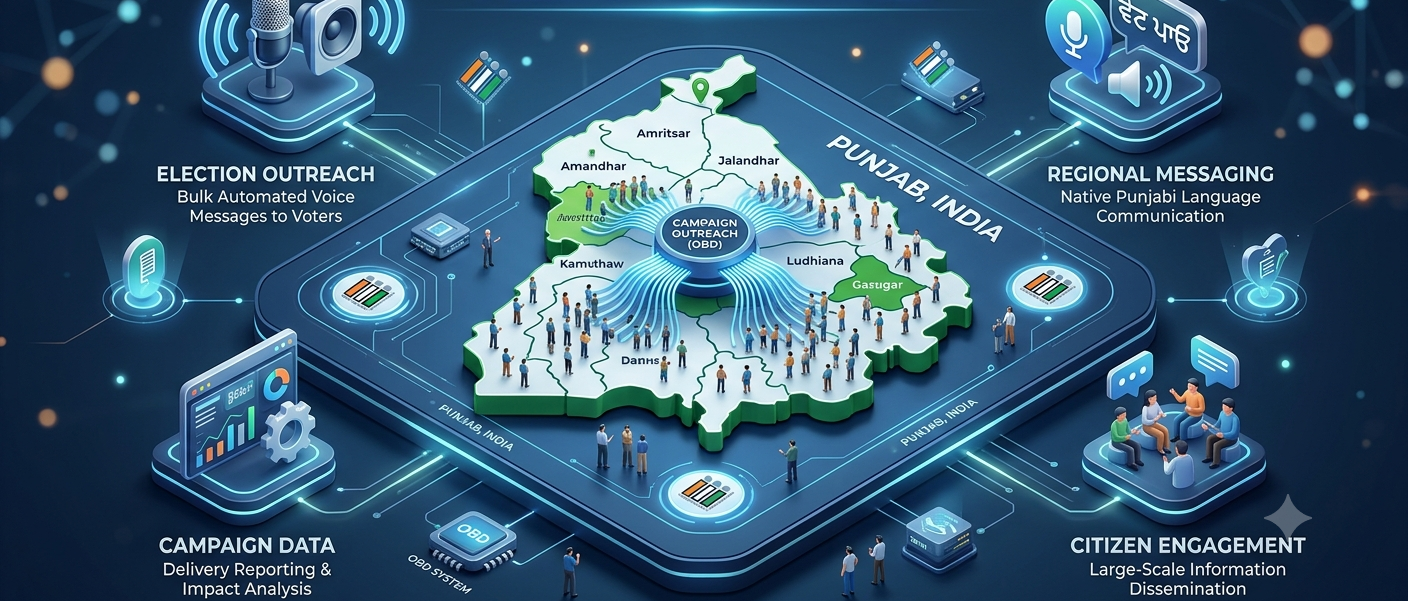
This is why Bulk Voice Call (OBD) has become an increasingly important communication tool for political parties, candidates, and campaign managers. Whether announcing rallies, sharing candidate messages, coordinating volunteers, or reminding voters about polling day, bulk voice call OBD political campaign strategies help campaigns connect with large rural audiences quickly and efficiently.
In this guide, we’ll explore how Bulk Voice Call Service works, why it is highly effective in rural voter outreach, and how political campaigns can use OBD responsibly and strategically during the 2027 election cycle.
📌 What Is Bulk Voice Call (OBD)?
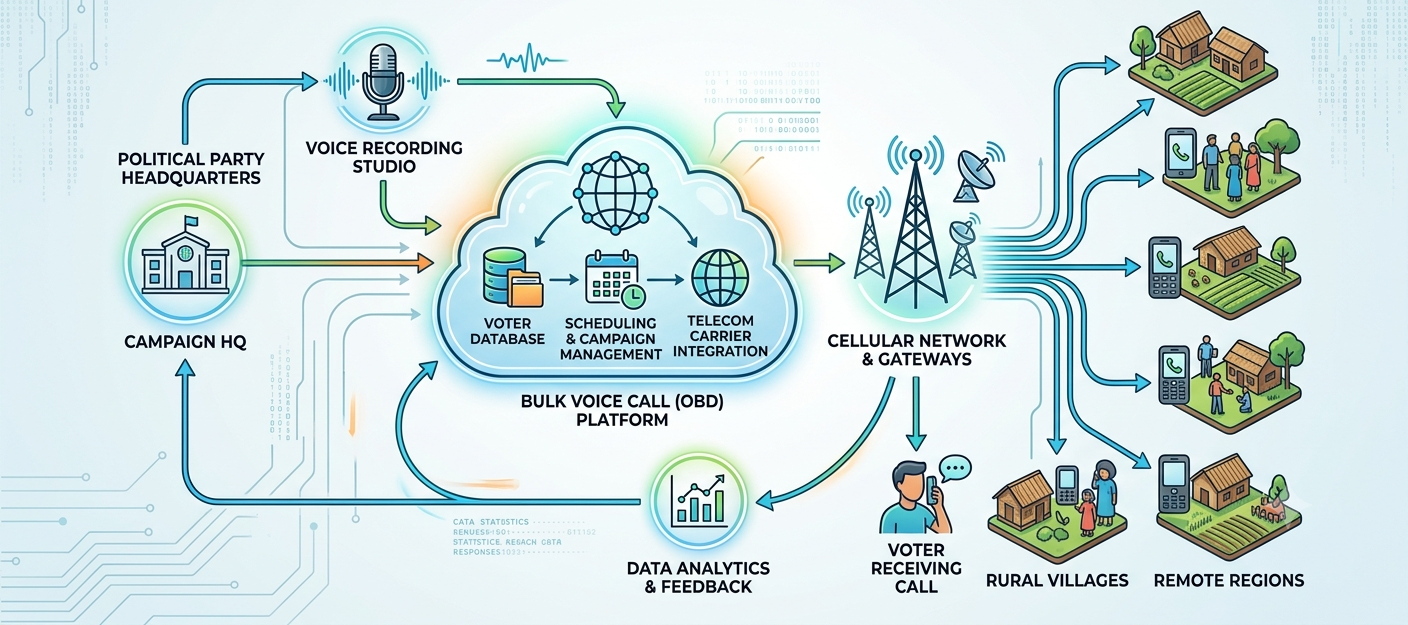
OBD (Outbound Dialing) is an automated calling technology that allows organizations to send pre-recorded voice messages to thousands or even millions of recipients simultaneously.
Instead of manually calling voters, campaign teams upload a verified contact database and broadcast recorded messages through a Bulk Voice Call platform.
A typical OBD campaign can deliver:
- 🎤 Candidate voice messages
- 📢 Rally announcements
- 📅 Campaign schedule updates
- 🗳️ Polling day reminders
- 📍 Booth-level information
- 👥 Volunteer instructions
- 🌐 Regional-language communication
Because recipients hear an actual voice recording, OBD creates a more personal communication experience than a text message.
🌾 Why OBD Works Well in Rural Areas
Rural voter outreach presents unique communication challenges.
Campaigns often need to communicate with:
- 🏘️ Villages with limited internet access
- 📱 Feature phone users
- 👴 Elderly voters
- 📖 Low-literacy populations
- 🌐 Multilingual communities
- 🚜 Geographically dispersed voters
Voice communication helps overcome many of these barriers.
⭐ Key Advantages of Bulk Voice Call OBD Political Campaigns
📵 No Internet Required
Recipients can receive voice calls on basic mobile phones without internet access.
🌐 Supports Regional Languages
Campaigns can record messages in local languages and dialects, improving voter understanding and engagement.
🤝 Personal Communication
A candidate’s own voice often creates stronger emotional connection and credibility.
🚀 High Reach
Large voter databases can be contacted within a short period of time.
🔁 Consistent Messaging
Every recipient hears the same approved campaign message.
🗳️ How Political Parties Use Bulk Voice Calls
🎤 Candidate Voice Appeals
One of the most common uses of OBD is broadcasting a personal message from the candidate.
These recordings typically include:
- 👤 Candidate introduction
- 🏗️ Local development priorities
- 🤲 Public commitments
- 🗳️ Request for voter support
- 📅 Polling day participation appeals
Voice messages help candidates communicate directly with voters without physically visiting every village.
📢 Rally and Event Announcements
Political parties frequently use Bulk Voice Calls to announce:
- 📍 Public meetings
- 🎪 Village rallies
- 🚗 Roadshows
- 🗓️ Campaign events
- 👥 Volunteer gatherings
Automated calls can notify thousands of voters within minutes.
🎯 Best Practices for Rural OBD Campaigns
For maximum campaign effectiveness:
- ✅ Use local languages
- ✅ Keep messages short and clear
- ✅ Use the candidate’s own voice
- ✅ Schedule calls responsibly
- ✅ Verify contact databases
- ✅ Track campaign reports