By Rohit Jadhav, Nexcomm. Reviewed 11 November 2026.
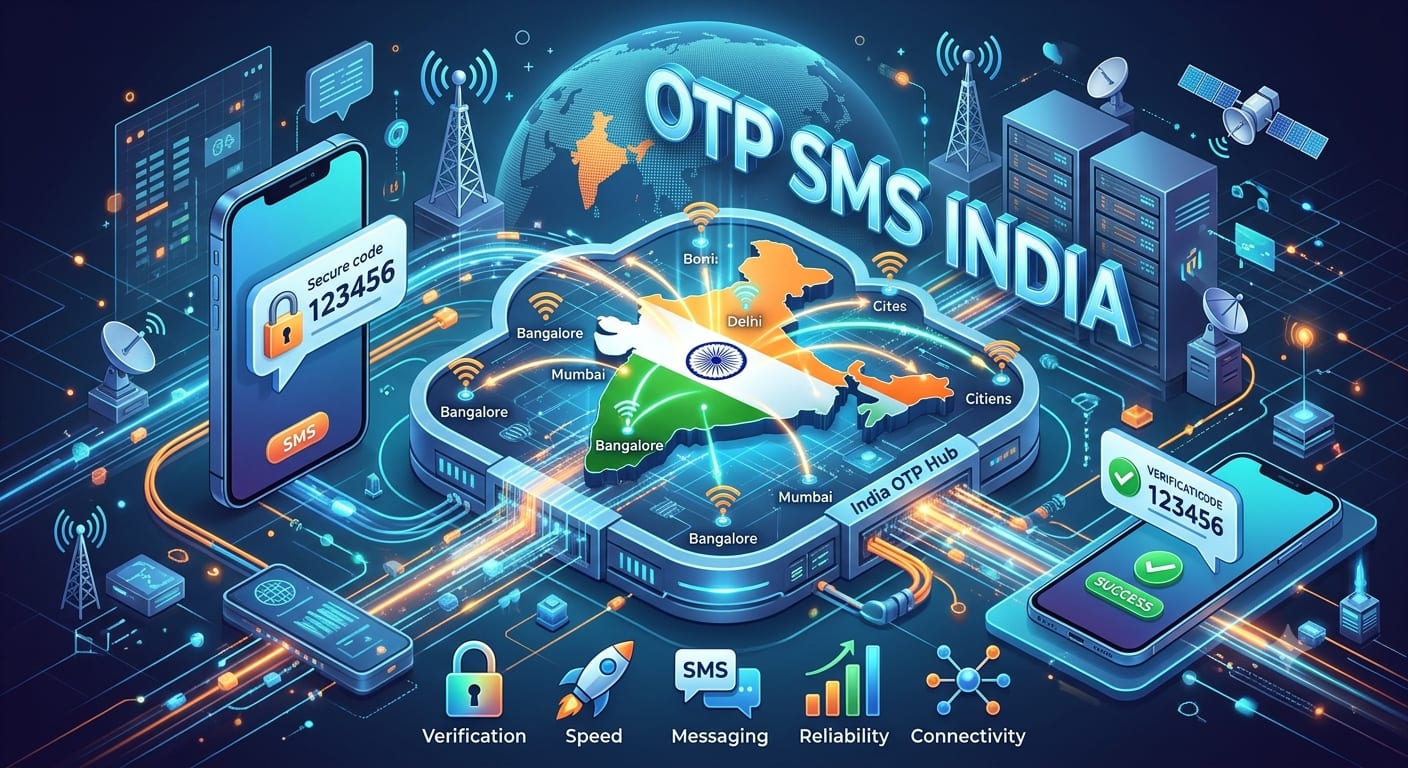
An OTP is the one message where speed and reliability matter more than price. If it arrives late, the customer leaves the checkout or the login. This guide explains how to compare OTP SMS providers in India on things you can measure. It builds on our bulk SMS provider guide. We sell OTP and other messages through our bulk SMS service, so test every claim, including ours.
Quick answer
A good OTP SMS provider sends on a transactional route, registers your OTP template, delivers within seconds at your peak load, gives per-message delivery status through an API, and can tell you quickly why a message failed. Test those with a trial before you integrate.
What to compare
| Check | Why it matters | How to test |
|---|---|---|
| Route | OTP must use the transactional route, not promotional. | Ask in writing which route carries your OTP. |
| Delivery time | OTPs expire; a slow one is a failed one. | Send 100 OTPs across networks and record the time to arrival on each handset. |
| Peak load | Sales and logins spike together. | Ask how many messages a second your account can send, and test a burst. |
| Delivery status API | Your app needs to know if it failed. | Read the API documentation for status callbacks and error codes. |
| Template handling | The OTP text has to match the registered template. | See DLT template variables and test a mismatch. |
| Failover | One route can fail. | Ask whether a backup route exists and how a switch works. |
| Support | OTP failures hit users at once. | Ask what the support hours and escalation are. |
How OTPs fail, and what to ask
- Template mismatch. The message text does not match the registered template, so it is rejected. Read why DLT templates get rejected.
- Sender or header problems. The header is not approved for that template; see sender ID basics.
- Delay or non-delivery on one network. Check delivery reports by operator and handset.
- User-side blocking. The number is on a block list or the handset is off. A provider cannot fix this; your app should offer a resend.
Design choices that reduce failures
- Keep the OTP template short, with one variable for the code.
- Offer a resend button after a short wait, and limit resends to prevent abuse.
- Show the user which number the code was sent to.
- Log the delivery status for each OTP so support can answer "I did not get it".
- Do not put marketing text in an OTP; it mixes routes and risks your sender.
A hypothetical test plan
An online store shortlists three providers. For each it registers one OTP template, sends 100 OTPs to staff handsets on four networks across a weekday evening, and records the arrival time. It also sends a burst of 20 in a few seconds to see how the route handles load, and raises one support ticket. It chooses the provider with the steady delivery times and the clearest failure reasons, not the lowest rate.
More guides: Bulk SMS guides.
Frequently asked questions
Is OTP SMS transactional?
OTPs go on the transactional route. See transactional vs promotional SMS.
Do I need DLT registration for OTP?
Yes. The header and the OTP template have to be registered. See the DLT registration guide.
How fast should an OTP arrive?
Aim for seconds, and measure it yourself in a trial. No provider can promise a fixed time for every network.
Why did my OTP not arrive?
Check the delivery report first: rejected template, header problem, network delay or an unreachable handset are the usual causes.
Sources checked
- TRAI, TCCCPR 2018, trai.gov.in.
- Nexcomm's DLT and template guides linked above.
We did not compare named providers; ask each for a trial and measure.