By Rohit Jadhav, Nexcomm. Reviewed 11 November 2026.
Providers describe how they reach the telecom networks in different ways. Some say they connect "directly" to operators, others say they work through an aggregator, and many mix both. The words are used loosely, so this guide explains what they usually mean and which questions get a real answer. It supports our bulk SMS provider guide. We sell bulk SMS, so ask us the same questions.
Quick answer
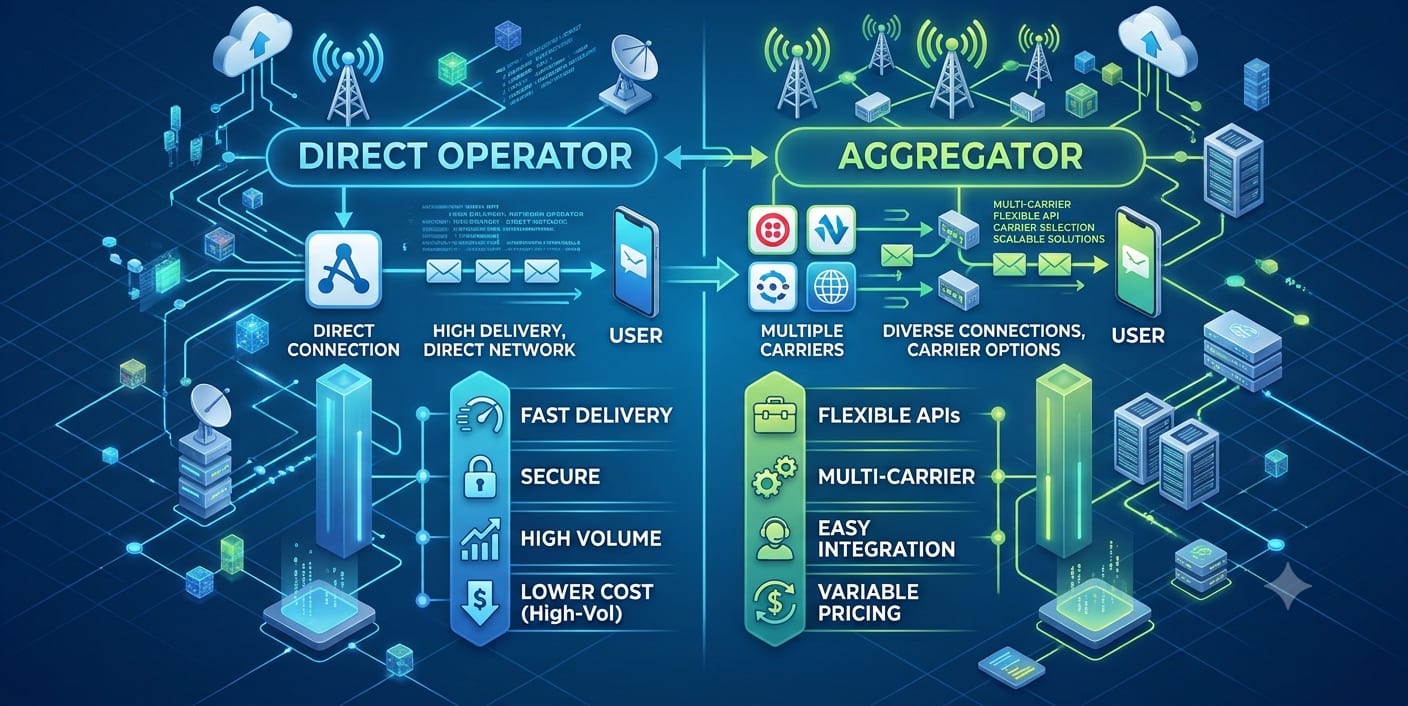
A direct operator connection means the provider's systems link to the operator's messaging platform without another company in between. An aggregator connection means a middle company sits between the provider and one or more operators. Neither is automatically better. What matters is delivery speed, reporting, support and who is accountable when a message fails, so ask for evidence and test.
What the terms usually mean
| Direct connection | Through an aggregator | |
|---|---|---|
| Path | Provider to operator | Provider to aggregator to operator |
| Possible upside | Fewer hops, more control over the route and reports | One connection reaches several operators, which helps smaller providers |
| Possible downside | Operator by operator set-up; a provider may be direct with some and not others | An extra party can add delay and another point of failure |
| Who you call when it fails | The provider | The provider, who may need to ask the aggregator |
The table shows possibilities, not guarantees. A well-run aggregator route can beat a poorly run direct one.
Why the label alone is not enough
- Mixed routes. A provider can be direct on one operator and via an aggregator on another.
- Different traffic types. OTP and promotional traffic can use different routes. See transactional vs promotional SMS.
- Changes over time. Routes change when contracts or capacity change.
Questions that cut through the label
- For each of my message types, which route do you use today?
- Is it the same for every operator?
- Can you show delivery reports by operator for a test batch?
- If a route fails, is there a backup, and how does the switch happen?
- Who is accountable for a delay: you, or another company?
- How soon do I hear about a route problem?
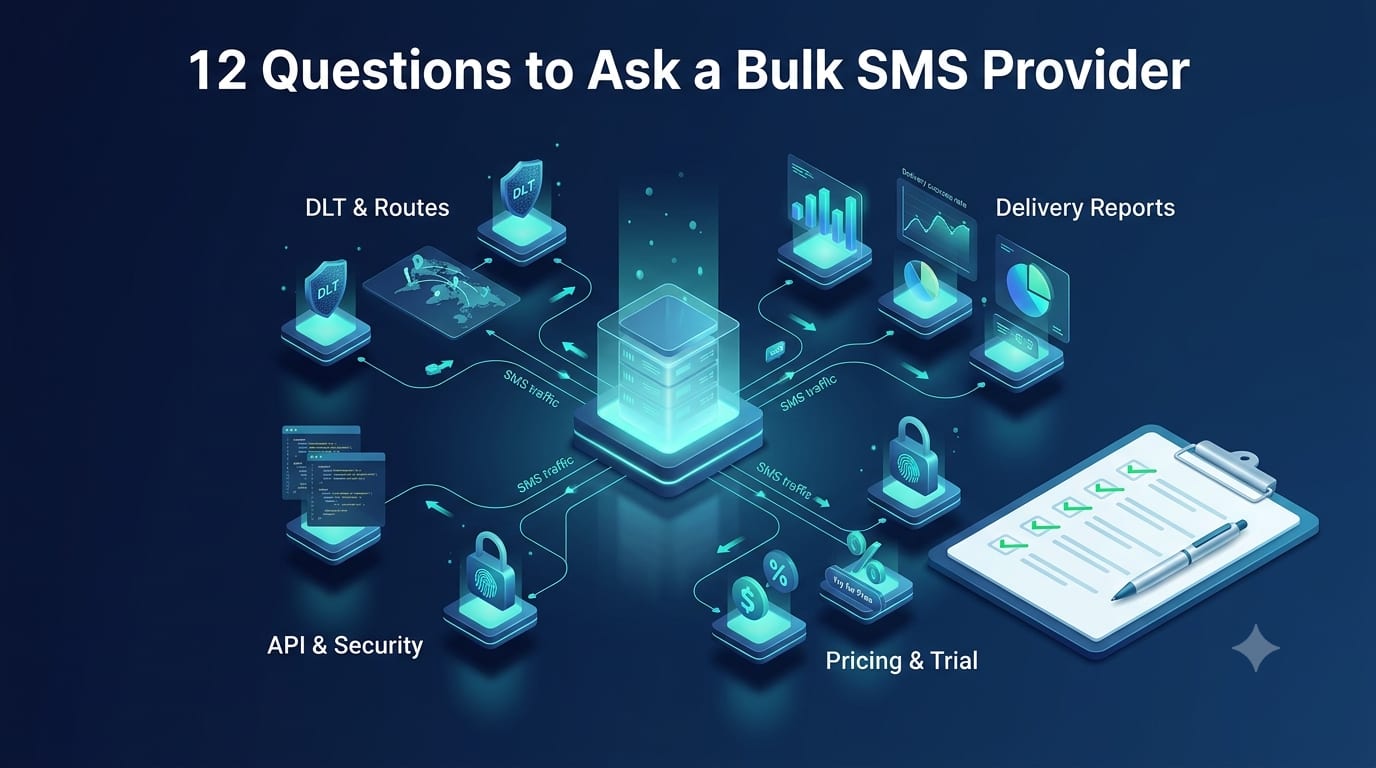
Get the answers in writing, and compare them with your own test; see our twelve questions to ask a provider.
How to test it yourself
- Send the same template to handsets on every major operator in your target area.
- Note the time from submit to arrival and the delivery status each time.
- Repeat at a busy hour and a quiet hour.
- Compare operators. A pattern of one slow operator tells you more than any label.
A hypothetical comparison
Two providers both quote the same rate. One says "direct to all operators" and cannot show reports by operator. The other says "direct to some, aggregator for the rest" and shows a clear report for a 200-number test. The second gives you evidence to decide, which the first did not.
More guides: Bulk SMS guides.
Frequently asked questions
Is direct operator connectivity always better?
No. It can help with speed and control, but a poorly run direct route can still fail. Test it.
Does it affect price?
It can, but price should be compared for the same message mix; see panel vs managed service for cost points beyond the rate.
Does it affect DLT?
You register on the DLT platform whichever route is used. See DLT registration.
Sources checked
- TRAI, TCCCPR 2018, trai.gov.in.
- Nexcomm's guides linked above.
This post describes general terms. It makes no claim about how any named company, including Nexcomm, routes messages.