WhatsApp Bulk Messaging for Gujarat Election 2027: A Complete Guide 📲🗳️
Introduction
The Gujarat Assembly Election 2027 is expected to be an important political event, with parties, candidates, political consultants, campaign teams and communication agencies preparing their outreach strategies well in advance.
According to the Election Commission of India, the current term of the Gujarat Legislative Assembly is due to be completed on 19 December 2027. Gujarat has 182 Assembly constituencies. However, the official election schedule for 2027 will be announced by the Election Commission closer to the election.
As campaign communication becomes increasingly digital, WhatsApp Bulk Messaging for Gujarat Election 2027 can provide a structured way for authorized campaign teams and political organizations to communicate updates, event information, volunteer instructions and other permitted information.
The effectiveness of WhatsApp communication depends not only on message delivery but also on consent, responsible data usage, platform policies and applicable election regulations.
What Is WhatsApp Bulk Messaging?
WhatsApp bulk messaging refers to sending business or organizational messages to a larger audience through an approved WhatsApp Business communication infrastructure.
For election-related communication, it can be used to organize information into structured communication campaigns instead of relying entirely on individual messages or manual conversations.
Depending on the communication objective, messages may include:
Meeting and event notifications
Volunteer coordination updates
Public programme information
Campaign schedule updates
Frequently asked questions
Registration or enquiry confirmations
Feedback and support messages
Important organizational announcements
The objective should be clear, relevant and permission-based communication, rather than indiscriminate messaging.
Why WhatsApp Can Be Useful for Gujarat Election Communication 📱
WhatsApp is widely used for personal and business communication in India, making it an important digital channel for organizations that need to communicate information efficiently.
For campaign teams, WhatsApp communication can help create a more organized communication workflow.
1. Faster Information Distribution
Important updates can be prepared and distributed through structured messaging campaigns instead of depending entirely on one-to-one communication.
For example, an authorized organization may need to communicate:
Event timings
Venue changes
Volunteer instructions
Meeting reminders
Public programme information
Organizational announcements
2. Better Communication Management
Large campaigns can involve multiple teams working across constituencies, districts and local areas.
A structured WhatsApp communication system can help teams maintain separate communication workflows for different operational requirements.
3. Two-Way Communication
WhatsApp does not have to be limited to broadcasting information.
When appropriately configured, it can also support conversations where recipients can:
Ask questions
Request information
Select an available option
Submit an enquiry
Connect with a support representative
This can make communication more interactive.
WhatsApp Bulk Messaging Use Cases for Gujarat Election 2027
The exact use case should depend on the campaign's communication requirements and applicable rules.
Event and Meeting Updates
Campaign organizations may need to communicate information about authorized meetings, public programmes and organizational events.
Messages can include:
Date and time
Venue
Programme details
Registration information
Contact details
Volunteer Coordination
Large election operations often require coordination among volunteers and field teams.
WhatsApp can be used for operational communication such as:
Meeting reminders
Training schedules
Team instructions
Reporting workflows
Internal announcements
Feedback Collection
Where appropriate and legally permitted, communication workflows can be designed to collect feedback or enquiries.
A simple conversational flow can ask a user to select an option and then route the interaction to the relevant team.
Bulk Messaging vs Manual WhatsApp Communication
Feature | Manual Communication | Structured Bulk Messaging |
|---|---|---|
Large-scale communication | Difficult | More manageable |
Message scheduling | Limited | Available depending on setup |
Audience organization | Manual | Structured |
Reporting | Limited | Better campaign-level visibility |
Automation | Low | Higher |
Two-way workflows | Manual | Can be automated |
Team management | Difficult at scale | More organized |
The right approach depends on the communication objective, audience permissions and applicable platform requirements.
Important Compliance Considerations ⚖️
Election-related communication requires additional care.
Before launching any WhatsApp communication campaign, organizations should review applicable Election Commission of India requirements, platform policies, telecom/data regulations and other relevant legal requirements.
Consent and Opt-In
Organizations should use appropriately obtained contact information and respect user permissions.
Avoid using databases where recipients have not provided appropriate consent or where the origin and legitimacy of the data cannot be established.
Responsible Data Management
Contact databases should be handled securely.
Campaign teams should consider:
Where the data came from
Whether communication is permitted
How consent was obtained
Who has access to the database
How opt-out requests are handled
How long information is retained
Avoid Spam and Misleading Content
Bulk communication should not be used to distribute deceptive, false or misleading information.
Messages should clearly communicate their purpose and should follow applicable election and platform requirements.
Follow Platform Rules
WhatsApp communication infrastructure is subject to Meta's applicable business messaging policies and technical requirements.
Organizations should use approved communication channels and follow applicable template, consent and messaging rules rather than attempting to bypass platform restrictions.
How to Plan a WhatsApp Communication Strategy
A successful WhatsApp communication workflow should be planned before messages are sent.
Step 1: Define the Objective
First determine why WhatsApp is being used.
Examples include:
Event communication
Volunteer coordination
Public information
Support
Enquiry management
Step 2: Organize the Audience
Use appropriate and lawfully obtained contact data.
Where relevant, audiences can be organized according to legitimate communication requirements such as:
Constituency
District
Volunteer group
Event registration
Communication preference
Step 3: Prepare Clear Messages
Keep messages short, understandable and informative.
Avoid unnecessary claims, excessive promotional language or content that could create confusion.
Step 4: Create a Communication Workflow
Define what happens after a person receives and responds to a message.
For example:
Message → Response → Automated information → Enquiry → Human support
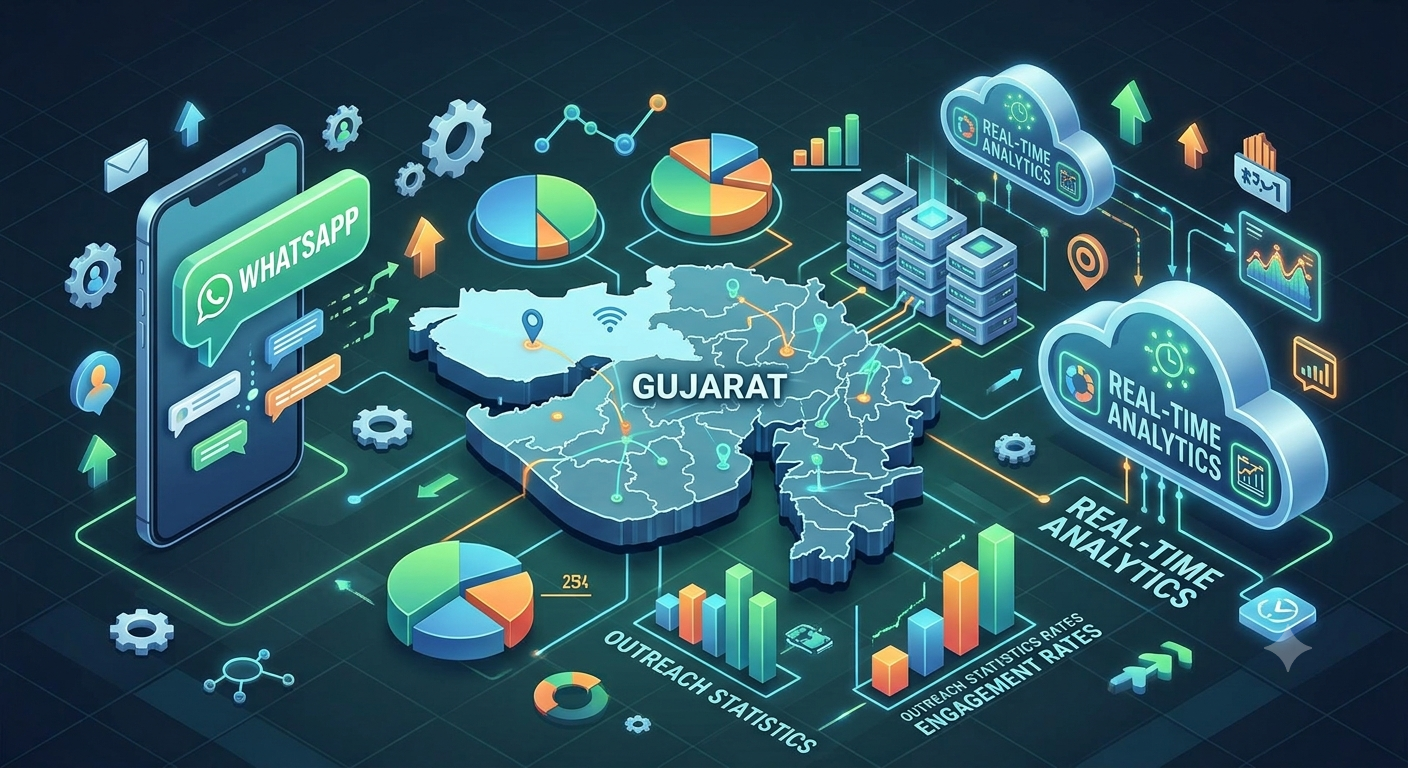
Step 5: Monitor Campaign Performance
Depending on the approved platform setup, communication teams can monitor relevant operational metrics such as delivery, responses and enquiry volumes.
This helps teams identify communication problems and improve future workflows.
Benefits of WhatsApp Bulk Messaging for Campaign Teams
When used responsibly, a structured WhatsApp communication system can provide several operational advantages:
📲 Faster information distribution
⚙️ Automated communication workflows
🤖 Automated responses to common questions
👥 Better audience organization
📊 Improved communication tracking
💬 Two-way conversations
🕐 Reduced manual communication workload
🔄 Better coordination between teams
However, technology should support the communication strategy—not replace responsible campaign planning and compliance.
Best Practices for WhatsApp Bulk Messaging
For Gujarat Election 2027 communication, campaign teams and political consultants should consider these practices:
Use verified and authorized communication infrastructure.
Communicate only with appropriately permissioned audiences.
Keep messages relevant and easy to understand.
Avoid misleading or unverified information.
Respect user preferences and opt-out requests.
Maintain proper records of communication and data sources.
Secure contact databases and limit unnecessary access.
Review election-related regulations before launching campaigns.
Follow WhatsApp's current business messaging policies.
Use human support when automated communication is insufficient.