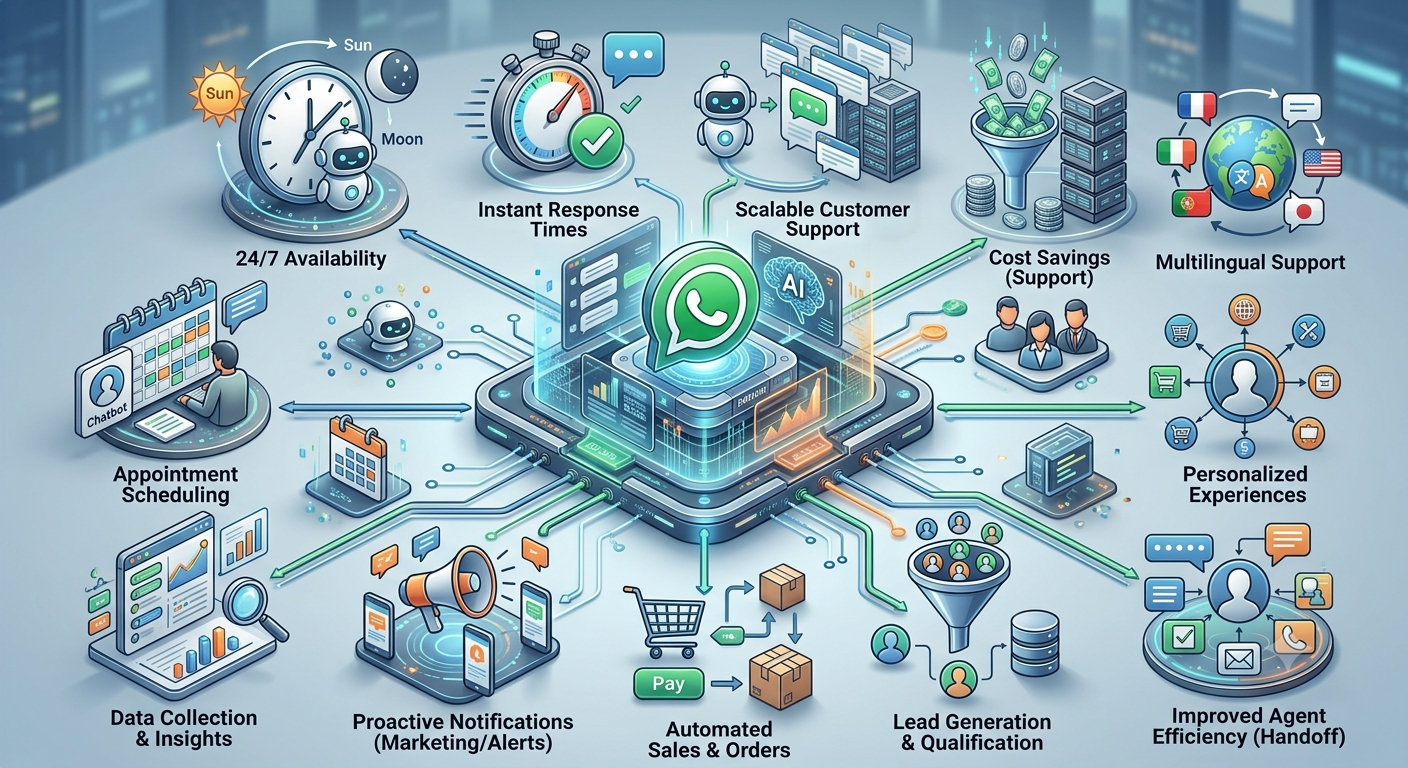
Top Benefits of an AI WhatsApp Chatbot for Businesses in 2026
New to this topic? Start with our guide to what an AI WhatsApp chatbot is and how it works.
An AI WhatsApp chatbot helps businesses respond to customer questions, qualify leads, guide buyers, automate routine tasks, and provide support beyond regular business hours. By combining WhatsApp conversations with AI-powered language understanding and structured automation, businesses can make customer communication more responsive without relying entirely on manual replies.
For businesses exploring automation, Nexcomm’s WhatsApp API and chatbot solutions can help connect customer conversations with business workflows. The right chatbot strategy, however, starts with understanding where customers need help and which tasks are suitable for automation.
In this guide, we explain the key benefits of AI WhatsApp chatbots, how businesses can apply them, which industries can benefit, what to consider before implementation, and how to measure results.
Table of Contents
What is an AI WhatsApp chatbot?
Why businesses are adopting AI chatbots
Top 12 benefits of an AI WhatsApp chatbot
Industry use cases
AI WhatsApp chatbot vs. traditional customer support
AI chatbot vs. rule-based chatbot
Best practices for implementation
Challenges and limitations to consider
How to measure chatbot performance
Frequently asked questions
What Is an AI WhatsApp Chatbot?
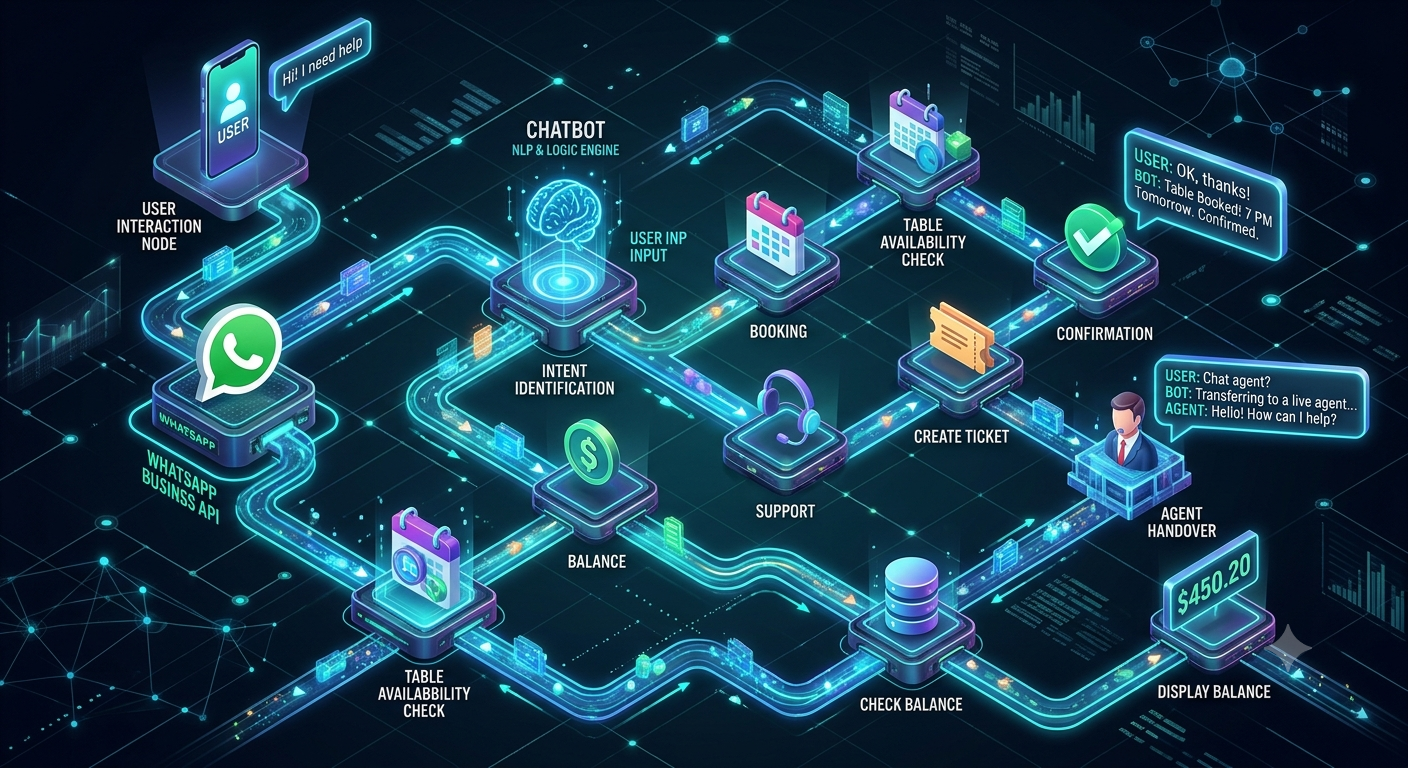
An AI WhatsApp chatbot is an automated conversational assistant that interacts with customers through WhatsApp. Depending on its design, it can use natural language processing, AI models, predefined workflows, or a combination of these technologies to understand requests and provide relevant responses.
For example, a customer might ask, “When will my order arrive?” Another might write, “Can you check my delivery status?” An AI-enabled chatbot may recognize that both messages relate to delivery tracking and guide the customer through the same process.
A business chatbot can support tasks such as:
Answering frequently asked questions.
Sharing product, service, and pricing information.
Capturing and qualifying sales enquiries.
Helping customers book appointments or request demonstrations.
Providing order and delivery updates when connected to relevant systems.
Directing complex questions to the appropriate team.
Identifying recurring questions and common customer concerns through conversation analytics.
Not every chatbot uses AI in the same way. A rule-based chatbot follows predefined decision paths, while an AI-enabled chatbot can interpret a wider range of natural-language questions. Many businesses benefit from combining both approaches: AI for understanding customer intent and structured workflows for important actions.
Why Are Businesses Adopting AI WhatsApp Chatbots?
Customers often prefer messaging because they can ask a question, receive information, and continue a conversation without waiting for a phone call or composing a formal email.
At the same time, businesses may receive similar enquiries repeatedly throughout the day. Sales teams answer pricing questions, support teams explain processes, and operations teams respond to requests for updates.
A well-designed chatbot can take care of suitable repetitive interactions while giving employees more time for situations that need judgement, empathy, or specialist knowledge.
The main opportunity is not simply to automate more messages. It is to make customer communication more useful, consistent, and manageable as enquiry volumes grow.
Top 12 Benefits of an AI WhatsApp Chatbot for Businesses
1. Provide customer support beyond business hours
Customers do not always contact a business between 9 AM and 6 PM. They may enquire about a product in the evening, request an appointment on a weekend, or need basic information during a holiday.
A chatbot can answer approved frequently asked questions and guide customers through common tasks outside normal working hours.
For example, a coaching institute can provide course details, admission dates, eligibility criteria, and enquiry forms even when its admissions team is unavailable.
Business benefit: Customers can access basic assistance when they need it, while employees can focus on requests that require human attention.
A chatbot should still explain its limitations and provide a clear route to a human representative when the request cannot be resolved automatically.
2. Reduce customer waiting time
When customers need simple information, waiting for a team member to become available can create unnecessary friction.
A chatbot can respond immediately to common questions about business hours, product availability, booking procedures, delivery policies, or service details—provided its answers are configured correctly and its information is up to date.
Consider an online retailer receiving dozens of questions about delivery timelines during a sale. Instead of answering every question manually, the chatbot can explain the delivery policy or retrieve an order update if the required system integration is available.
Business benefit: Faster initial responses and fewer avoidable delays.
The objective should be to resolve enquiries accurately, not simply to send an instant reply. A quick but incorrect answer can create more work than a slower, helpful response.
3. Reduce repetitive customer support work
Many support teams spend considerable time answering the same questions.
Common examples include:
What are your business hours?
How can I book an appointment?
Where can I find your product catalogue?
What documents are required?
How do I check my order status?
What is your return or cancellation policy?
A chatbot can handle suitable routine questions and guide customers to the correct information.
Employees can then spend more time resolving complicated complaints, handling exceptions, assisting high-value customers, and making decisions that require experience.
Business benefit: Better use of employee time and the potential to reduce the workload associated with repetitive enquiries.
Actual cost savings depend on enquiry volume, chatbot resolution quality, maintenance requirements, integration costs, and how much human intervention remains necessary.
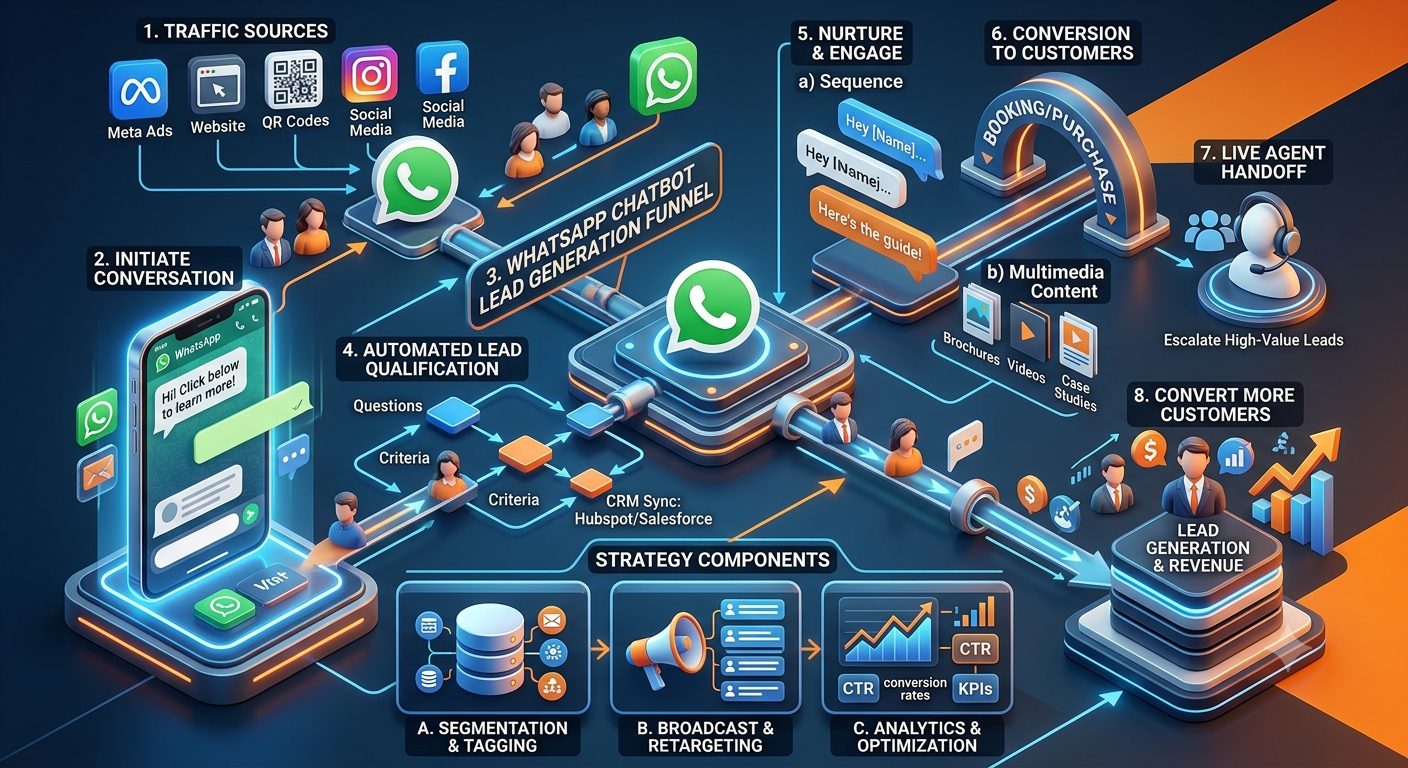
4. Improve lead generation and qualification
A chatbot can turn a basic enquiry into a more structured sales opportunity by asking relevant questions and recording the customer's requirements.
For example, a real estate business might ask a prospective buyer about:
Preferred location.
Approximate budget.
Property type.
Expected purchase timeline.
Preferred time for a site visit.
The answers help the sales team understand the enquiry before making contact.
Similarly, a B2B company can ask about the type of solution required, company size, intended use case, and expected purchase timeline before routing the enquiry to a salesperson.
Business benefit: Better-organised enquiries, more context for sales conversations, and less manual data collection.
Lead capture should remain proportionate to the customer's request. Ask for information that has a clear purpose rather than making customers complete a long questionnaire before receiving basic assistance.
5. Create more relevant customer experiences
Customers do not all need the same information. A first-time buyer may need product explanations, while an existing customer may want an order update or help using a service.
When a chatbot has access to appropriate and reliable context, it can tailor its responses to the current conversation, customer preferences, or relevant purchase history.
For example, a customer who asks about a software subscription may receive information about the plan they are considering rather than a generic catalogue of every product.
Personalization should be based on information the business is permitted to use and should respect customer privacy.
Business benefit: More relevant conversations and a smoother customer journey.
Personalization does not mean that every response should be AI-generated. For prices, policies, eligibility criteria, and other important information, approved content and reliable system data should take priority over unsupported generated answers.
6. Support sales and product discovery
Customers often need help deciding what to buy. They may be unsure which product fits their requirements, which service tier they need, or whether a particular option is suitable.
A chatbot can ask a few relevant questions and guide customers towards appropriate products or services.
For example, an electronics retailer could ask a customer about their budget and intended use before presenting a shortlist of suitable products. A software provider could explain differences between plans and offer a demonstration when the customer is ready.
Depending on the business, the chatbot can also help with cross-selling related products or explaining upgrades.
Business benefit: Customers receive guidance earlier in the buying journey, while sales teams can focus on more complex discussions and purchase decisions.
Recommendations should be transparent and based on genuine customer requirements. The chatbot should not pressure customers into unsuitable purchases or invent product capabilities.
7. Handle multiple conversations at once
Human teams can only respond to a limited number of conversations at a time. Incoming enquiries may rise sharply during promotional campaigns, product launches, admissions periods, or seasonal sales.
A chatbot can manage multiple conversations concurrently, subject to the capacity and limitations of the underlying platform and integrations.
For instance, an education provider may receive enquiries about fees, eligibility, course schedules, and application deadlines from many prospective students at the same time. A chatbot can handle routine questions while directing unusual cases to the admissions team.
Business benefit: More consistent handling of routine enquiries during periods of high demand.
Scaling conversations does not remove the need for monitoring. Businesses should test peak loads, review failure cases, and ensure there is a workable process for escalating requests that the chatbot cannot handle.
8. Connect customer conversations with business systems
A chatbot becomes more useful when it can work with the systems that employees already use.
Depending on the integration, it may be able to:
Record new enquiries in a CRM.
Create or update support tickets.
Retrieve order or booking information.
Send qualified leads to a sales team.
Trigger an approved internal workflow.
Share relevant information from a maintained knowledge base.
Imagine a service company receiving a WhatsApp enquiry about an existing booking. If the chatbot can securely retrieve the booking details, it may provide a useful update without asking the customer to repeat information already supplied.
Business benefit: Less duplicate data entry, better continuity between customer conversations and internal processes, and more organised follow-up.
Integration quality matters. Businesses should define which systems are authoritative, what information the chatbot can access, and what actions require confirmation or human approval.
9. Automate order updates and routine notifications
Customers frequently contact businesses to check whether an order has been confirmed, whether a delivery is on the way, or whether an appointment is approaching.
Where suitable systems and messaging permissions are in place, businesses can use WhatsApp automation to provide relevant updates such as:
Order confirmations.
Dispatch and delivery notifications.
Appointment reminders.
Booking confirmations.
Payment reminders.
Updates about a requested service.
These notifications can reduce uncertainty and help customers find information without contacting support.
Business benefit: More proactive communication and potentially fewer status-related enquiries.
Automated notifications should reflect accurate, current information. Businesses must also follow applicable WhatsApp messaging rules, including consent requirements and the relevant template and messaging-window rules.
10. Support multilingual customer communication
Businesses serving customers across different regions may need to communicate in more than one language.
An AI-enabled chatbot may help interpret questions and provide responses in supported languages, while structured menus can offer customers a clear choice of language at the beginning of a conversation.
For example, a business serving customers in Maharashtra might offer Marathi, Hindi, and English options, depending on its audience and the quality of its language support.
Business benefit: More accessible customer communication and fewer language-related barriers.
Multilingual capability should be tested using real customer phrasing, regional expressions, spelling variations, and domain-specific terms. Important instructions, legal information, financial details, and healthcare-related content may need human review before being delivered in another language.
11. Understand customer questions and identify service gaps
Customer conversations can reveal what people find confusing, what information is missing, and which issues occur repeatedly.
When businesses review chatbot analytics and conversation outcomes, they may identify patterns such as:
Repeated questions about pricing.
Confusion about eligibility or documentation.
Frequent requests for a human representative.
Product features customers struggle to understand.
Common points where customers abandon a process.
Support topics that the chatbot regularly fails to resolve.
These findings can guide improvements to website content, product documentation, service processes, and chatbot responses.
Business benefit: Better-informed decisions based on recurring customer needs.
Conversation analysis must respect applicable privacy requirements. Access to transcripts and customer data should be limited to appropriate personnel, and sensitive information should be handled carefully.
12. Support business growth without making every process manual
As a business grows, it may receive more enquiries, manage more customers, and need to coordinate more complex workflows.
A chatbot can help standardize suitable routine interactions, such as answering frequently asked questions, collecting enquiry details, and guiding customers through common procedures.
This can make customer communication easier to manage as volumes increase.
However, a chatbot is not a replacement for every employee or process. Complex complaints, sensitive cases, exceptions, and relationship-based sales often require human judgement.
Business benefit: A more repeatable customer communication process that can support growth when combined with capable employees and well-maintained systems.
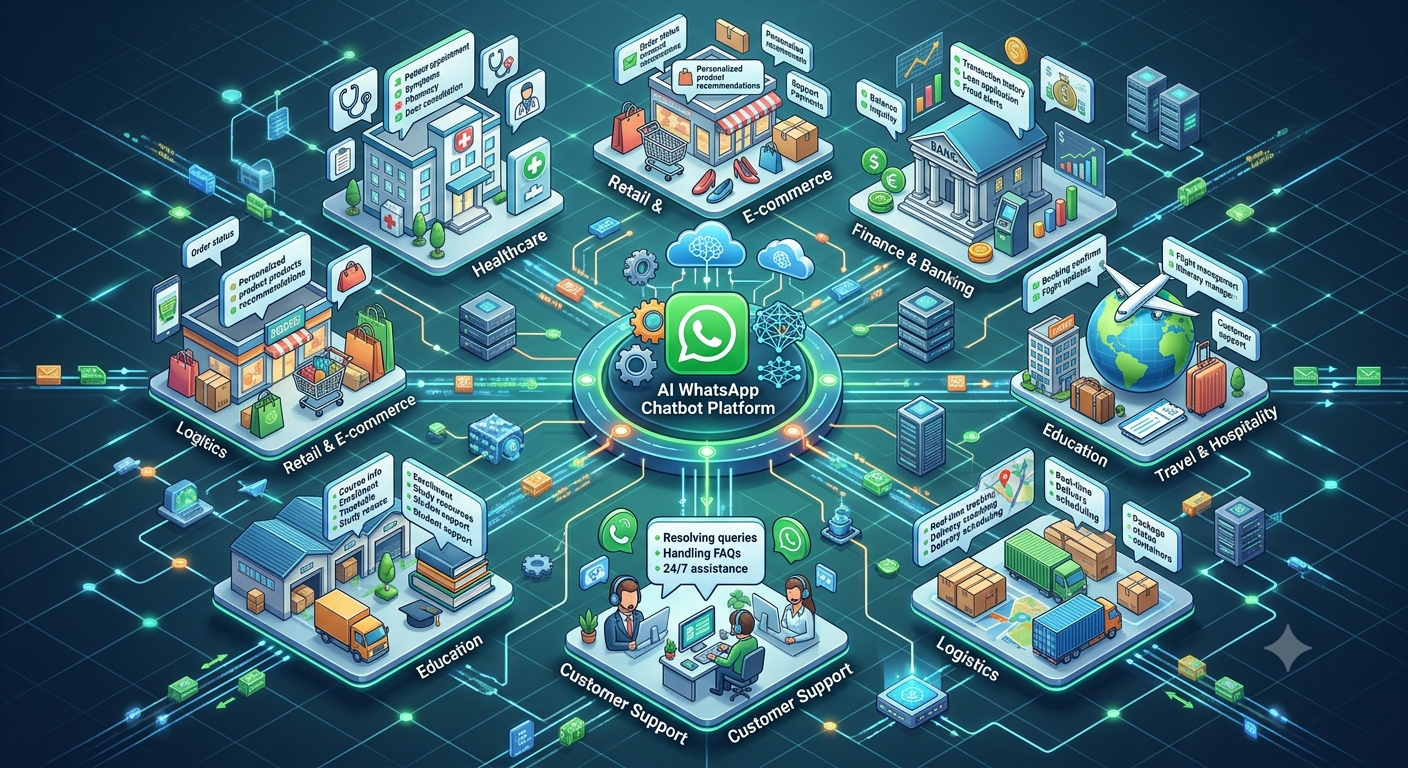
Industry Use Cases for AI WhatsApp Chatbots
The benefits of a chatbot depend on how customers interact with a business. The following examples show where the technology may be useful.
E-commerce and retail
Online stores can use chatbots to help customers discover products, check availability, understand return policies, track orders, and find answers to common questions.
A chatbot might ask a customer what type of product they need, present relevant options, and guide them towards a product page or a human sales representative.
Retailers should ensure that stock, price, delivery, and return information is accurate before automating those answers.
Healthcare and clinics
Clinics and healthcare providers can use chatbots for appointment enquiries, clinic hours, directions, general administrative information, and appointment reminders.
A chatbot should not be treated as a substitute for professional medical judgement. It should not make unsupported diagnoses or provide emergency care instructions in place of appropriate medical assistance. Sensitive health information also requires careful handling.
Education and coaching institutes
Schools, colleges, universities, and coaching centres can automate responses to common questions about:
Courses and programmes.
Admission dates and eligibility.
Fee structures.
Required documents.
Class schedules.
Application procedures.
For example, the chatbot can collect a prospective student's preferred course and direct them to the correct admissions information. Complex eligibility questions can be transferred to the admissions team.
Real estate
Real estate businesses receive enquiries about property prices, locations, amenities, availability, and site visits.
A chatbot can collect a buyer's preferences, share verified property information, and help arrange a conversation with a sales representative.
This can make it easier for agents to understand the prospect's requirements before following up.
Banking, insurance, and financial services
Financial businesses may use chatbots to share general product information, explain application procedures, provide approved service guidance, and route customer requests.
Any account-specific or sensitive action requires appropriate authentication, access controls, and compliance review. The chatbot should not disclose confidential account information simply because someone asks for it.
Travel and hospitality
Hotels, travel companies, and booking services can use chatbots to answer questions about reservations, check-in procedures, cancellation policies, travel arrangements, and available services.
When connected to a booking system, a chatbot may help customers retrieve reservation details or request changes through an approved process.
B2B services and SaaS
Business-to-business companies can use chatbots to capture enquiries, explain service offerings, qualify prospects, schedule demonstrations, and route technical questions.
For software companies, a chatbot can direct users to relevant help articles or collect information about a problem before creating a support ticket.
For service providers, it can gather basic requirements before arranging a consultation.
AI WhatsApp Chatbot vs. Traditional Customer Support
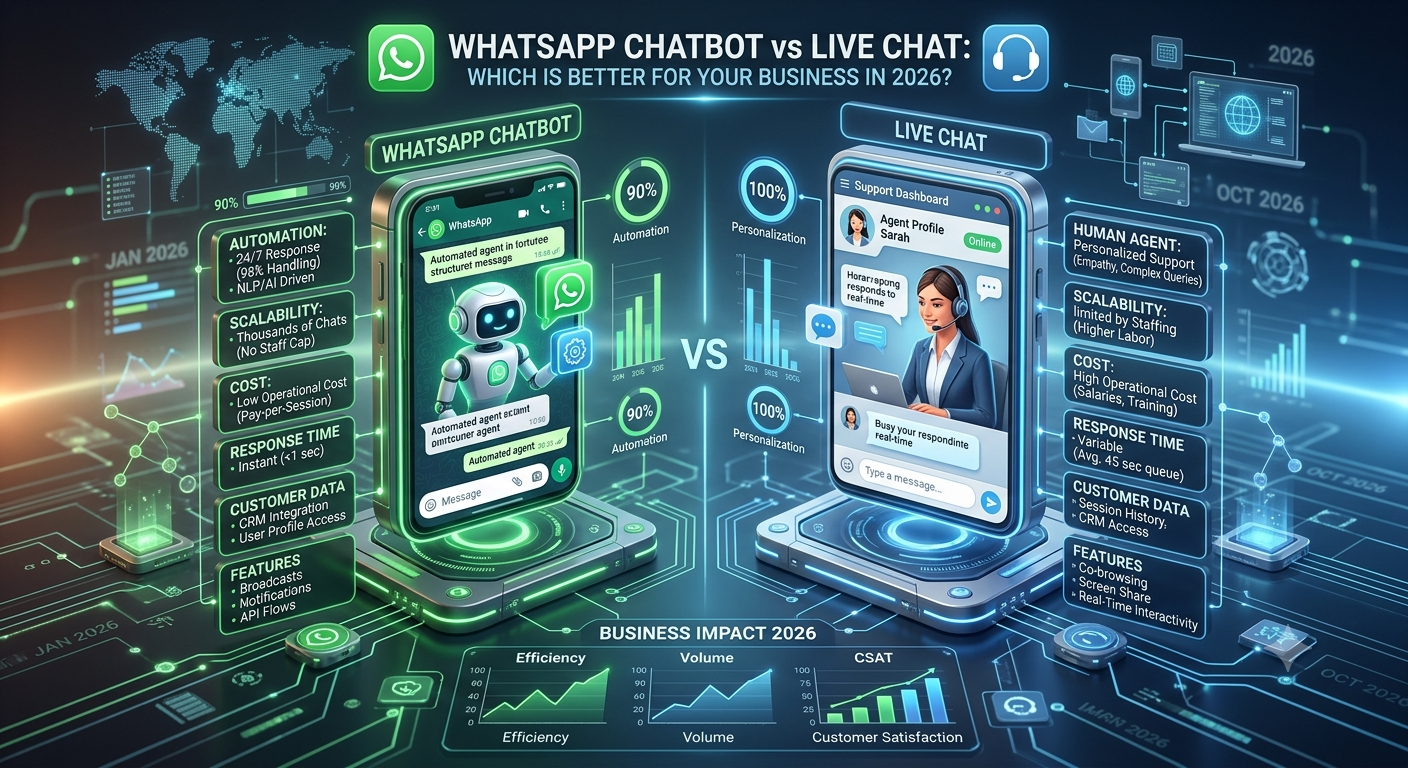
An AI chatbot and a human support team serve different purposes. The strongest approach is often to combine automated assistance with a clear route to human help.
Area | AI WhatsApp chatbot | Human support team |
|---|---|---|
Availability | Can respond outside business hours | Depends on staffing and schedules |
Routine questions | Can automate suitable, repeated enquiries | Can answer questions and handle exceptions |
Complex issues | Limited by its instructions, data, and capabilities | Can apply judgement and investigate unusual cases |
Personal interaction | Can personalize responses when reliable context is available | Can use empathy, negotiation, and human judgement |
Concurrent conversations | Can manage multiple chats within platform capacity | Limited by staff availability and workload |
Consistency | Can use approved responses and workflows | Quality may vary by training and circumstances |
Setup and maintenance | Requires configuration, testing, monitoring, and updates | Requires recruitment, training, and ongoing management |
A chatbot should not be judged only by how many conversations it handles. The more useful question is whether it resolves the right enquiries accurately and helps customers reach a suitable outcome.
AI WhatsApp Chatbot vs. Rule-Based Chatbot
Not every business needs a fully AI-driven chatbot. A rule-based chatbot can be effective when customer journeys are predictable and the required actions are clearly defined.
Feature | Rule-based chatbot | AI-enabled chatbot |
|---|---|---|
Understanding messages | Usually relies on predefined choices, rules, or keywords | Can interpret a wider range of natural-language requests |
Conversation flow | Follows predefined paths | Can respond more flexibly within its configured scope |
Predictability | High for clearly defined paths | Depends on model behaviour, instructions, and available data |
Handling unusual questions | Often redirects when a rule is missing | May interpret some unfamiliar wording but can still fail |
Best suited for | FAQs, menus, fixed workflows, and structured data collection | More varied questions, intent recognition, and contextual assistance |
Main consideration | Every important path must be designed and maintained | Requires testing, reliable knowledge, guardrails, and monitoring |
For many businesses, a hybrid chatbot is a practical choice. It can use AI to understand what the customer means and structured workflows to perform important actions in a controlled way.
Best Practices for Implementing an AI WhatsApp Chatbot
1. Start with a clear business objective
Choose a specific problem to solve before designing the chatbot.
Examples include reducing repetitive support questions, improving lead qualification, helping customers retrieve order information, or making appointment booking easier.
Avoid trying to automate every customer interaction at launch.
2. Review real customer enquiries
Study frequently asked questions, support tickets, sales conversations, and common points of confusion.
This helps identify which enquiries are suitable for automation and which need a human representative.
3. Use reliable and approved information
Build the chatbot's knowledge from current product details, service information, policies, frequently asked questions, and other approved sources.
Assign responsibility for updating this information whenever prices, procedures, availability, or policies change.
4. Keep conversations simple
Ask only the questions needed to help the customer move forward.
Use clear language, concise answers, and relevant options. Avoid long menus and unnecessary requests for personal information.
5. Provide an easy route to a human
Customers should be able to request human assistance when the chatbot misunderstands a question or cannot solve a problem.
Define when escalation is required and transfer useful conversation context where appropriate, so customers do not have to repeat everything.
6. Protect customer information
Collect only the information needed for the intended task. Apply suitable access controls, retention practices, security measures, and privacy safeguards.
Review the applicable laws and platform policies for the business, industry, and type of data involved.
7. Follow WhatsApp messaging requirements
Businesses should manage customer consent, opt-outs, approved message templates where required, and other applicable WhatsApp Business Platform rules.
Do not assume that having a customer's phone number automatically grants permission to send every type of message.
8. Test before launch
Test common questions, ambiguous messages, misspellings, unsupported requests, incorrect inputs, and requests that require human assistance.
Also test what happens when connected systems are unavailable or return incomplete information.
9. Improve the chatbot using performance data
Review unanswered questions, failed workflows, customer drop-offs, escalation rates, and feedback.
Update the knowledge base and conversation flows based on actual problems rather than assuming that the initial version will work perfectly.
Challenges and Limitations to Consider
AI WhatsApp chatbots can improve customer communication, but businesses should plan for their limitations.
Incorrect or unsupported answers: AI can misunderstand a question or generate an answer that is not supported by the available information. Use approved knowledge sources, validation rules, and human escalation for important decisions.
Outdated information: A chatbot may provide incorrect information if product details, prices, availability, or policies are not maintained.
Complex customer problems: Some issues require investigation, empathy, negotiation, or a decision that cannot safely be automated.
Integration problems: An incomplete or unreliable connection to a CRM, booking system, or order database can produce incorrect updates or failed actions.
Customer privacy: Chatbot conversations may contain personal or confidential information. Access, storage, retention, and processing must be handled appropriately.
Ongoing costs: Businesses should consider platform fees, WhatsApp messaging charges, integrations, AI usage, maintenance, and the human time needed to supervise the system.
Customer acceptance: Some customers prefer speaking to a person. A chatbot should make the next step clear and should not create unnecessary obstacles to reaching a human.
A successful implementation recognizes these limitations and builds suitable safeguards around them.
How to Measure AI WhatsApp Chatbot Performance
The right metrics depend on the business objective. A customer support chatbot and a lead generation chatbot should not be evaluated in exactly the same way.
Metric | What it tells you |
|---|---|
First-response time | How quickly customers receive an initial response |
Resolution rate | The proportion of enquiries resolved through the intended process |
Human escalation rate | How often conversations need employee assistance |
Unanswered question rate | How often the chatbot cannot provide a useful response |
Lead qualification rate | The proportion of captured leads that meet the business's qualification criteria |
Appointment or demo booking rate | How often relevant conversations result in a completed booking |
Customer satisfaction | How customers rate the support experience |
Cost per resolved enquiry | The cost of resolving enquiries through the chatbot and supporting processes |
Conversion rate | The proportion of eligible conversations that lead to a defined business outcome |
Measure these metrics against a baseline from before implementation, where possible. Compare similar periods and enquiry types, and account for changes in campaign volume, staffing, seasonality, and customer mix.
For example, a higher escalation rate is not always a negative result. If more complex customers are successfully reaching a specialist instead of receiving an incorrect automated answer, escalation may be working as intended.
The goal is to improve meaningful customer and business outcomes—not to maximize automation for its own sake.
Frequently Asked Questions
What are the main benefits of an AI WhatsApp chatbot for businesses?
The main benefits include support outside business hours, faster responses to routine questions, reduced repetitive work, lead qualification, more relevant customer interactions, sales assistance, automated notifications, and insights into common customer needs. Results depend on the chatbot's design, data quality, and business processes.
Can an AI WhatsApp chatbot increase sales?
It can support sales by answering product questions, qualifying prospects, recommending suitable options, and helping customers book a consultation or complete the next step. Actual sales results depend on factors such as customer intent, pricing, product fit, follow-up quality, and the overall buying experience.
Is an AI WhatsApp chatbot suitable for small businesses?
Yes. Small businesses can begin with a focused use case, such as answering common questions, capturing enquiries, or scheduling appointments. Starting with a manageable workflow can make it easier to assess the benefits before expanding automation.
Does an AI WhatsApp chatbot replace human customer support?
No. It can handle suitable routine enquiries, but human representatives remain important for complex problems, complaints, sensitive information, exceptions, and situations requiring judgement. A clear escalation process is essential.
What is the difference between an AI chatbot and a rule-based WhatsApp chatbot?
A rule-based chatbot follows predefined menus and decision paths. An AI-enabled chatbot can interpret a wider range of natural-language questions. A hybrid approach combines AI-based understanding with structured workflows for actions that need greater control.
Can a WhatsApp chatbot connect to a CRM?
Yes, when the chosen platform and CRM support the necessary integration. Depending on the setup, a chatbot may record enquiries, update lead details, assign follow-up tasks, or retrieve relevant information. Access and data handling should be configured securely.
Are AI WhatsApp chatbots expensive to maintain?
Costs vary by platform, conversation volume, AI usage, integrations, and maintenance requirements. Businesses should assess the full cost of implementation and operation against measurable outcomes, such as reduced repetitive work, improved lead handling, and faster customer resolution.
Is WhatsApp consent required for automated business messages?
Businesses must follow applicable WhatsApp Business Platform policies and relevant laws, including requirements concerning customer consent, message templates where applicable, and opt-outs. The exact requirements depend on the type of message and the messaging context.
How can a business choose the right chatbot solution?
Start by identifying the intended use case, then assess the quality of AI responses, workflow controls, integration requirements, human handoff, reporting, privacy and security safeguards, scalability, support, and total cost. Test the solution using realistic customer questions before deploying it widely.
Conclusion
An AI WhatsApp chatbot can help businesses deliver more responsive customer service, reduce repetitive work, organize sales enquiries, automate suitable workflows, and learn from recurring customer questions.
The strongest results come from choosing the right use case, maintaining accurate information, protecting customer data, and making human assistance available when automation is not enough.
Rather than automating everything at once, start with one measurable customer problem, evaluate the results, and expand only when the chatbot consistently delivers a useful experience.
Businesses exploring implementation can learn more about Nexcomm’s WhatsApp API and chatbot solutions to understand the available options for customer communication and workflow automation.
More in AI and chatbot guides.